
Matcha during Ramadan: how to drink it between iftar and suhoor
At suhoor or after iftar, matcha can be part of your Ramadan nights. Here is when to drink it, how much is enough and how to stay well hydrated until maghrib.
During Ramadan, matcha works best at suhoor, for energy that builds gently through the morning, or after iftar, either plain or as a latte. One or two cups between iftar and suhoor are plenty, as long as water stays your main drink and you avoid having it too late at night. If you are pregnant, breastfeeding, on medication or have a health condition, ask your doctor first.
Why does matcha fit so well into Ramadan?
The holy month changes everything about our daily rhythm: meals move to the night, sleep gets shorter and the days are long without food or water. Many people want a little lift at suhoor without the ups and downs that a very strong coffee can bring. Matcha is an interesting option: it is the whole green tea leaf ground into a fine powder, and you drink all of it. A 2 g cup provides around 60 to 70 mg of caffeine, and the L-theanine naturally found in the leaf, combined with that caffeine, gives a calmer, more gradual kind of energy.
The idea is not to replace the mint tea on the iftar table, which is part of family tradition, but to offer another drink at another moment of the night.
Should you drink matcha at suhoor?
It is often the best time. Taken with your suhoor meal, matcha helps you wake up and start the morning more smoothly. A few tips:
- drink it during or right after the meal rather than on an empty stomach, for a gentler effect;
- keep it simple: 2 g of powder and 70 to 80 ml of water at 70–80 °C, or a milk version;
- pair it with a complete suhoor (eggs, wholegrain bread, cheese, dates, fruit) to last until maghrib.
If you have never whisked a bowl before, our guide on how to prepare matcha walks you through it in three minutes.
What about after iftar?
When you break your fast, your body first needs water, dates and a calm meal. Matcha can come a little later, for example an hour after iftar, alongside something sweet. With or without milk is up to you: plain, it feels lighter; as a latte, it is more comforting and more filling.
Timing is what really matters. Caffeine stays active for several hours. If you sleep between late evening and suhoor, avoid drinking matcha too late, say after 10 or 11 pm depending on your routine, so you do not cut into sleep that is already short.
Does matcha replace water?
No. Matcha is a pleasant drink, but it does not replace water. Between iftar and suhoor, spread several glasses of water across the evening rather than drinking everything at once. Harira, water-rich fruit such as watermelon, melon and oranges, and vegetables all help with hydration too. A simple rule: one large glass of water next to every cup of matcha.
How much matcha during Ramadan?
Keep it reasonable: one to two cups between iftar and suhoor, which means 2 to 4 g of powder. That adds up to roughly 60 to 140 mg of caffeine, well below the 400 mg per day reference for a healthy adult. Remember to count the other sources of the evening as well: mint tea, coffee, sodas. To learn more, read our article on how much matcha per day.
Matcha drink ideas for Ramadan evenings
- Date matcha latte: blend two or three pitted dates with warm milk, then pour it over freshly whisked matcha. The dates sweeten the drink naturally. Our recipe for matcha with almond milk and dates gives you the full version.
- Iced matcha after tarawih: when it is still warm on the way back from the mosque, whisked matcha poured over ice and cold milk is wonderfully refreshing.
- Plain matcha at suhoor: simple, light, nothing added.
Do watch the sugar, though. Between chebakia, sellou and iftar juices, sugar intake climbs quickly during the month. Good matcha does not need sugar: taste it on its own first, then add a date or a touch of honey if you like.
Who should check with a doctor first?
Fasting and caffeine do not suit everyone in the same way. Ask your doctor before drinking matcha during Ramadan if you are pregnant or breastfeeding (the reference is then 200 mg of caffeine per day), if you have diabetes, high blood pressure or heart rhythm problems, stomach issues, if you take medication or if you are sensitive to caffeine. Caffeinated drinks are not recommended for children.
Getting ready before the month starts
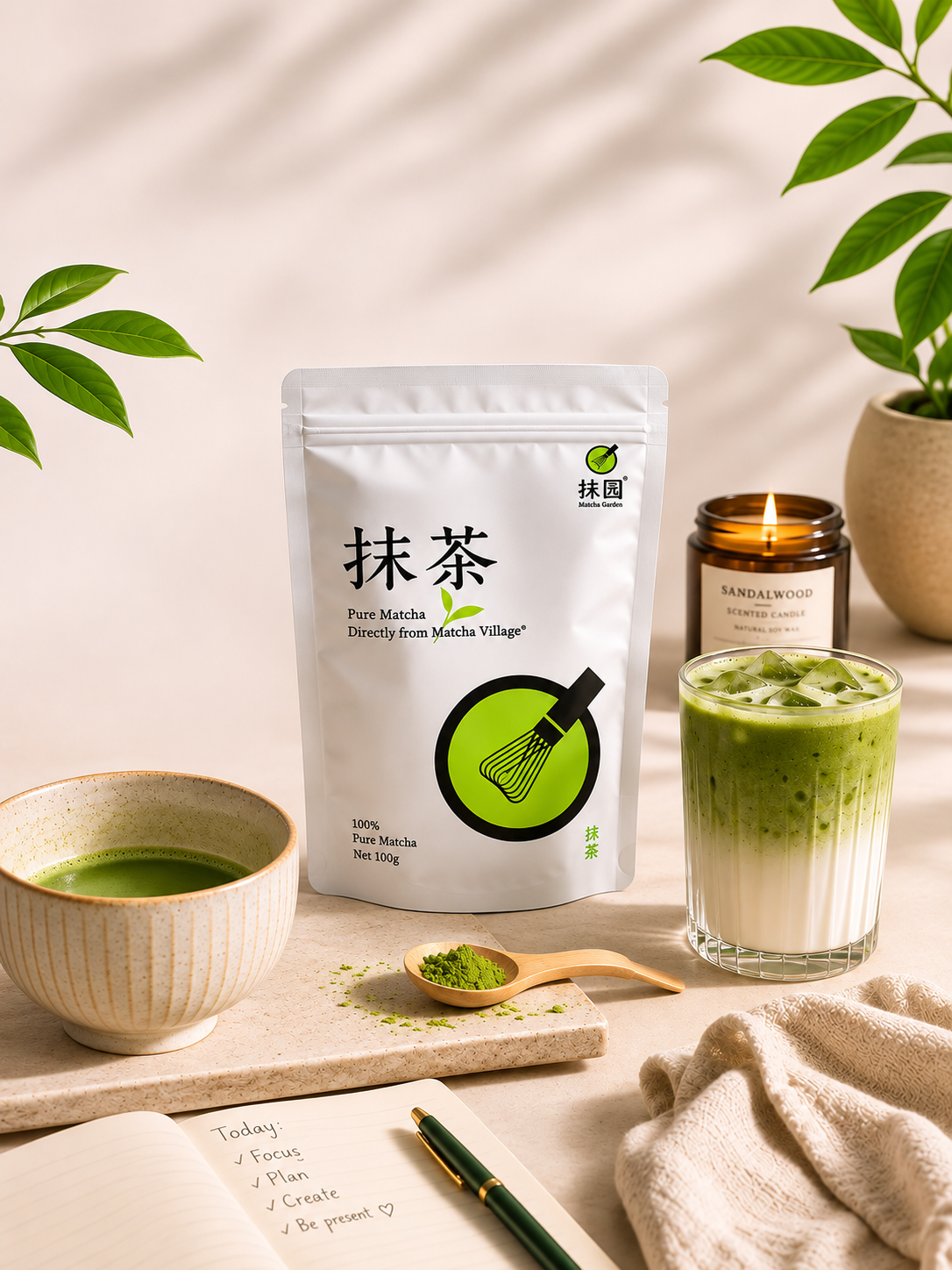
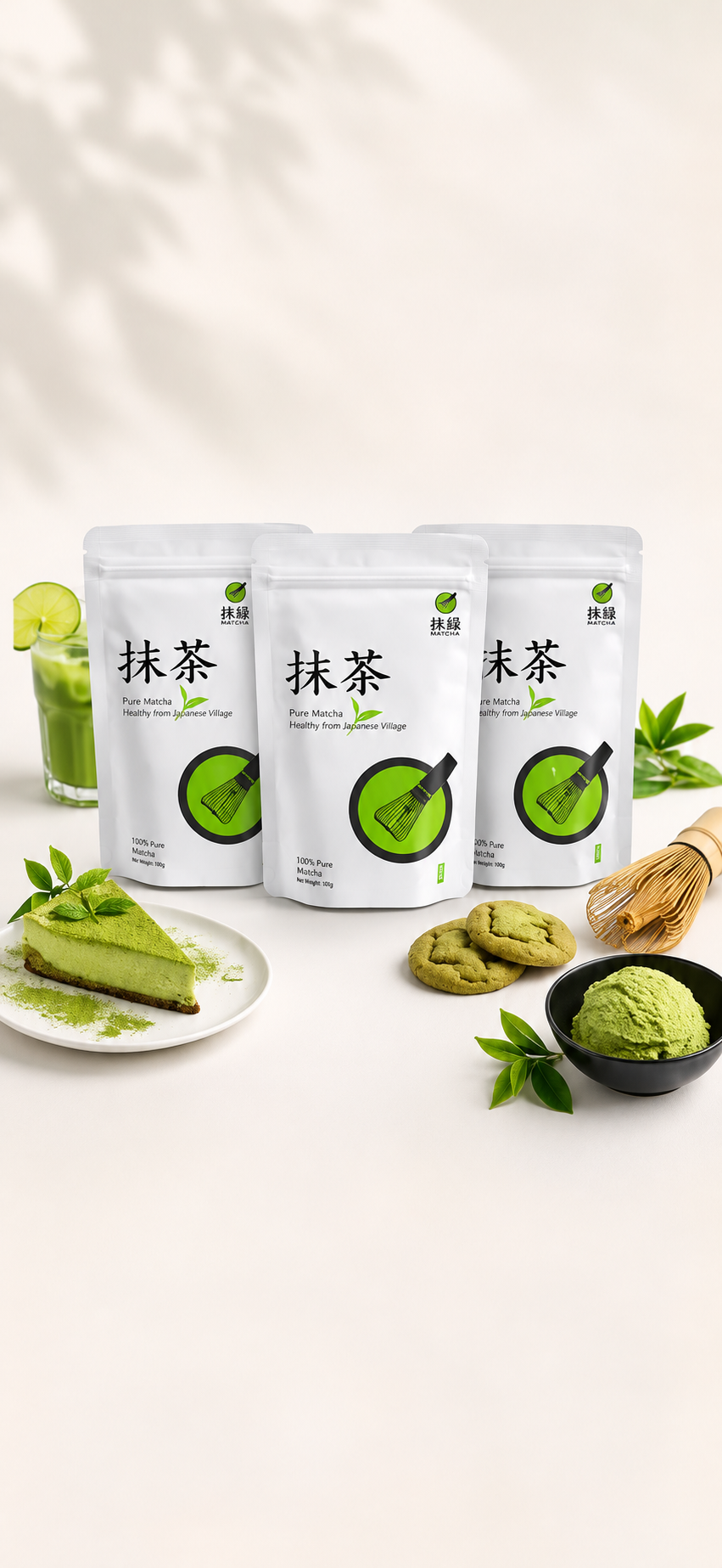
To avoid running out of matcha in the middle of Ramadan, it is worth planning ahead. Our organic Pure Matcha powder, 100% organic with no additives, gives about 50 cups per 100 g pouch. For the whole family, the buy 2 pouches, get 1 free offer was 299 MAD at the time of writing, and the Comfort Pack 100 g with kit brings together the powder and the tools you need to get started. Prices may change, so check the product page for the current price.
Delivery is free everywhere in Morocco, usually within 48 hours in most cities, with cash on delivery. Ramadan Mubarak to you and your loved ones.
FAQ
Can I drink matcha at suhoor?
Yes, it is actually a good moment: taken with your meal, it gives steady energy for the morning. Stick to one 2 g cup and drink water as well.
Does matcha stop you from staying hydrated while fasting?
One or two cups will not prevent good hydration as long as you drink enough water between iftar and suhoor. Have a large glass of water with every cup.
How many cups of matcha during Ramadan?
One to two cups between iftar and suhoor are enough, which is roughly 60 to 140 mg of caffeine. Avoid having the last one too late if you sleep before suhoor.
Matcha or coffee at suhoor?
Both contain caffeine, but a cup of matcha has less than a large filter coffee, and L-theanine gives a calmer kind of energy. It mostly comes down to taste and personal tolerance.
Can I drink matcha during Ramadan while pregnant?
During pregnancy and breastfeeding, the reference is 200 mg of caffeine per day, and fasting itself should be discussed with a health professional. Ask your doctor before drinking any.
For this recipe
What we use

Blog
Read next
Matcha and weight loss: what's true and what's exaggerated
Matcha will not make you lose weight on its own. Its real strength is replacing sodas, frappés and very sweet teas with a sugar-free drink. Here are the facts versus the hype.
Does matcha keep you awake? Caffeine, timing and tips
A cup of matcha contains 60 to 70 mg of caffeine, which stays active for several hours. Here is when to stop and how to enjoy it without ruining your nights.
Drinking matcha on an empty stomach: good or bad idea?
Matcha on an empty stomach suits some people and makes others queasy. It all depends on your stomach: here is how to enjoy it in the morning without discomfort.