
Matcha vs regular green tea: which should you choose?
Sencha, gunpowder, tea bags or matcha: they are all green tea, but growing, preparation, caffeine and price make all the difference. Here is how to choose.
Matcha is a green tea, but not like the others: its leaves are shade-grown and then ground, and you drink the whole powder instead of steeping it. As a result, a cup of matcha is more concentrated in caffeine and antioxidants than a cup of sencha, gunpowder or bagged green tea. Regular green tea stays lighter, simpler and cheaper; matcha offers more intensity and versatility.
What makes matcha different from other green teas?
They all come from the same shrub, Camellia sinensis. Regular green teas, such as Japanese sencha or the Chinese gunpowder used for Moroccan mint tea, are grown in full sun, then the leaves are heated, rolled and dried. You steep them for a few minutes and then remove them.
Matcha takes another route. A few weeks before harvest, the tea bushes are shaded. With less light, the leaves produce more chlorophyll and keep more L-theanine, which gives them their intense green colour and characteristic sweetness. The leaves are then dried, stripped of stems and veins, and ground into an extremely fine powder.
Why does drinking the whole leaf change everything?
When you steep green tea, the water only extracts part of what is in the leaf, and the rest goes in the bin with the leaves. With matcha, the powder is whisked into the water and you drink all of it. In practice:
- more antioxidants per cup: matcha is known to be rich in catechins, since the whole leaf is consumed;
- more caffeine: about 60 to 70 mg for a 2 g cup, compared with 20 to 40 mg for a cup of steeped green tea, depending on dose and steeping time;
- more L-theanine: combined with caffeine, it gives a calmer, steadier energy.
None of this makes regular green tea a bad drink, far from it. It simply explains why a small amount of matcha has a stronger effect. To find the right amount, read our guide on how much matcha per day.
How is each one prepared?
Regular green tea is the easiest: a spoonful of leaves or a tea bag, water at around 70–80 °C, two to three minutes of steeping, and you are done. Gunpowder for mint tea is often rinsed first, then steeped longer with mint and sugar.
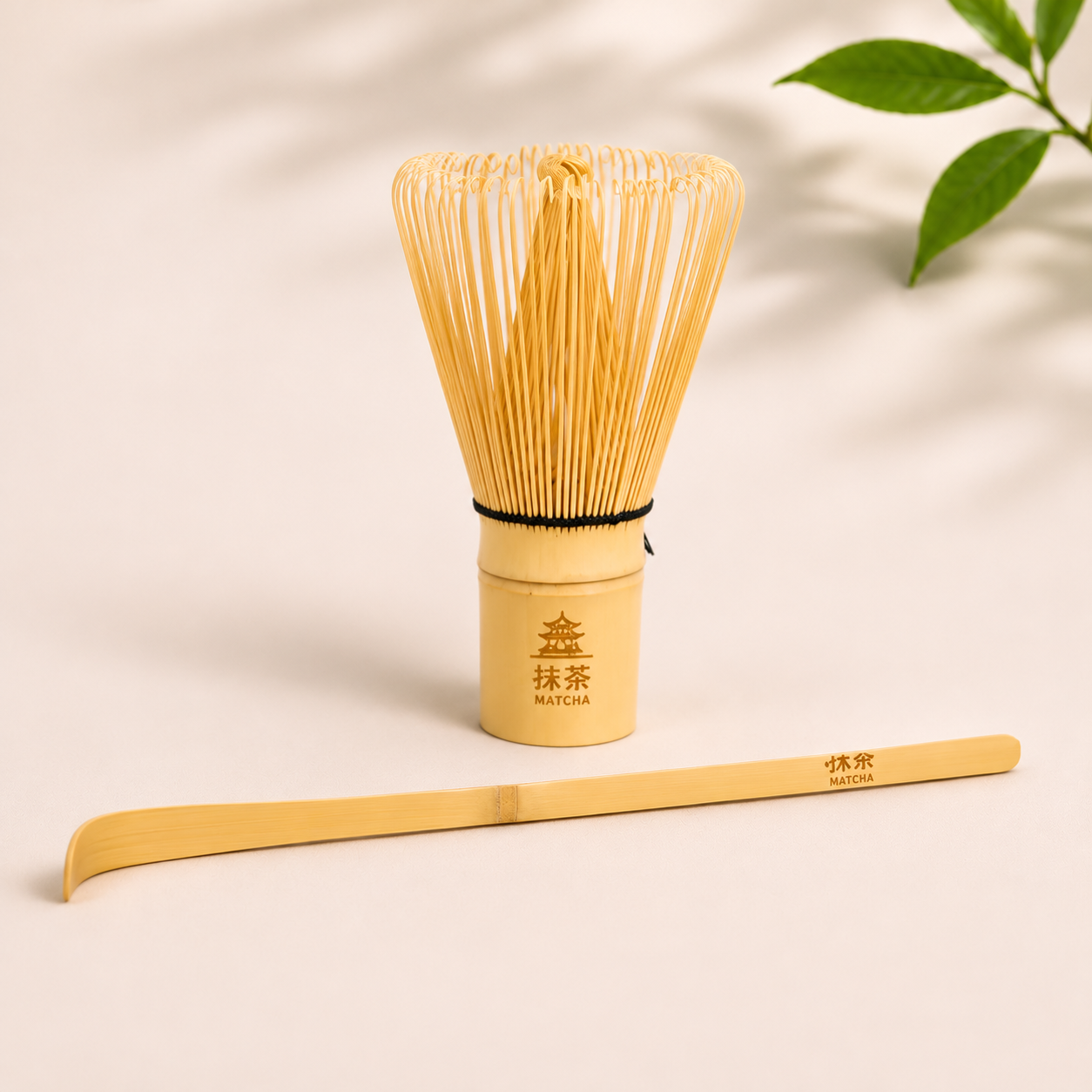
Matcha takes a little practice, but nothing complicated: sift 2 g of powder, add 60 to 80 ml of water at 70–80 °C, then whisk in a zigzag for about twenty seconds. The bamboo scoop and whisk set gives you the two tools you need to measure and get a nice froth. All the details are in our guide on how to prepare matcha.
Another advantage of matcha is versatility. You can drink it in a bowl, as a hot or iced latte, or use it in baking and smoothies, which loose-leaf tea does not really allow.
How do the prices compare?
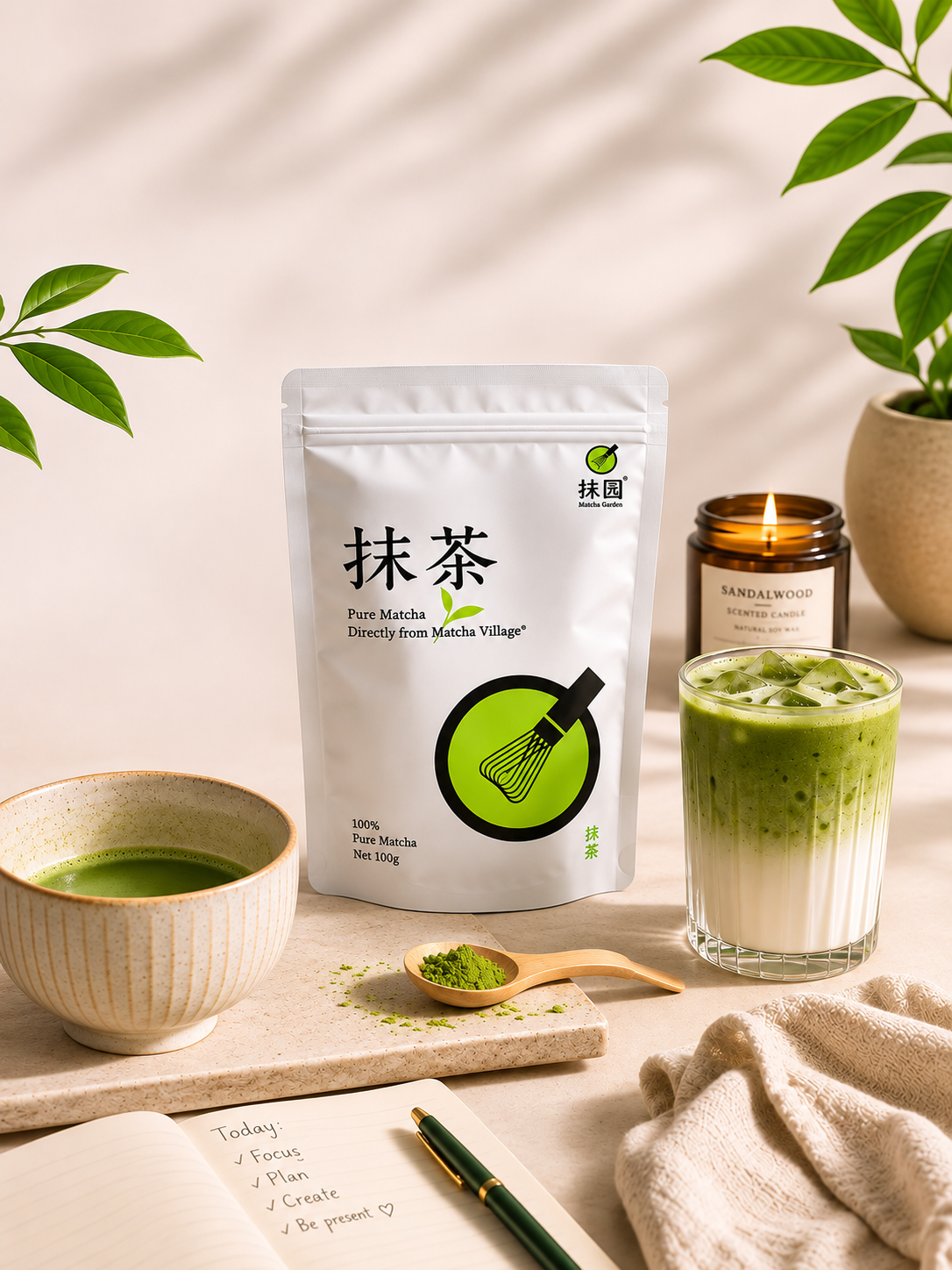
Loose or bagged green tea is clearly cheaper: a few dirhams cover several cups. Matcha costs more because shade-growing and fine grinding take more work. At the time of writing, our organic Pure Matcha powder costs 189 MAD for 100 g, which makes about 50 cups, so roughly 3.80 MAD per cup. That is more than a tea bag, but much less than a drink bought at a café. Prices may change, so always check the product page.
Which one fits your routine?
- You sip tea all day long: regular green tea is ideal, light and inexpensive.
- You want a focus drink in the morning or before a work session: matcha, being more concentrated, is a better fit.
- You want to replace your coffee: matcha, with caffeine close to an espresso.
- You love lattes, iced drinks and baking: matcha, no question.
- You are sensitive to caffeine: choose a light green tea, or a small dose of matcha (1 g) before noon.
If you are unsure which matcha to buy, our guide on choosing the right matcha helps you spot the key criteria: colour, origin and ingredients.
In short
Matcha first, regular green tea second:
- Growing: shaded before harvest / usually full sun
- Form: fine powder, fully consumed / leaves or bags steeped then removed
- Caffeine per cup: 60 to 70 mg / about 20 to 40 mg
- Antioxidants per cup: more concentrated / more moderate
- Taste: intense, sweet, umami / lighter, sometimes grassy or astringent
- Preparation: sieve and whisk, 3 minutes / simple steeping
- Cost per cup: about 3.80 MAD / a few dirhams or less
- Uses: bowl, latte, iced drinks, baking / cup or teapot
Our matcha is 100% organic, from Japan, with no sugar and no additives, and delivery is free anywhere in Morocco.
FAQ
Is matcha a green tea?
Yes, matcha is a green tea from Camellia sinensis. It stands out because it is shade-grown before harvest and sold as a powder that you drink whole.
Does matcha have more caffeine than green tea?
Yes. A 2 g cup of matcha contains about 60 to 70 mg of caffeine, compared with 20 to 40 mg for a cup of steeped green tea, because you consume the whole leaf.
Can you steep matcha like a tea bag?
No, matcha does not steep: it dissolves. Sift it, then whisk it into water at 70–80 °C to get a smooth, frothy drink.
Why is matcha more expensive than green tea?
Shade-growing, leaf sorting and very fine grinding take more work. Per cup it stays affordable: about 3.80 MAD for a 2 g cup with a 100 g pouch at 189 MAD at the time of writing.
For this recipe
What we use
Blog
Read next
Matcha and weight loss: what's true and what's exaggerated
Matcha will not make you lose weight on its own. Its real strength is replacing sodas, frappés and very sweet teas with a sugar-free drink. Here are the facts versus the hype.
Does matcha keep you awake? Caffeine, timing and tips
A cup of matcha contains 60 to 70 mg of caffeine, which stays active for several hours. Here is when to stop and how to enjoy it without ruining your nights.
Drinking matcha on an empty stomach: good or bad idea?
Matcha on an empty stomach suits some people and makes others queasy. It all depends on your stomach: here is how to enjoy it in the morning without discomfort.