
Homemade Matcha Latte: Easy Café-Style Recipe
A whisked matcha shot, 200 ml of hot frothy milk and a touch of sweetness: how to make a café-style matcha latte at home in 5 minutes, with orange-blossom and cinnamon twists.
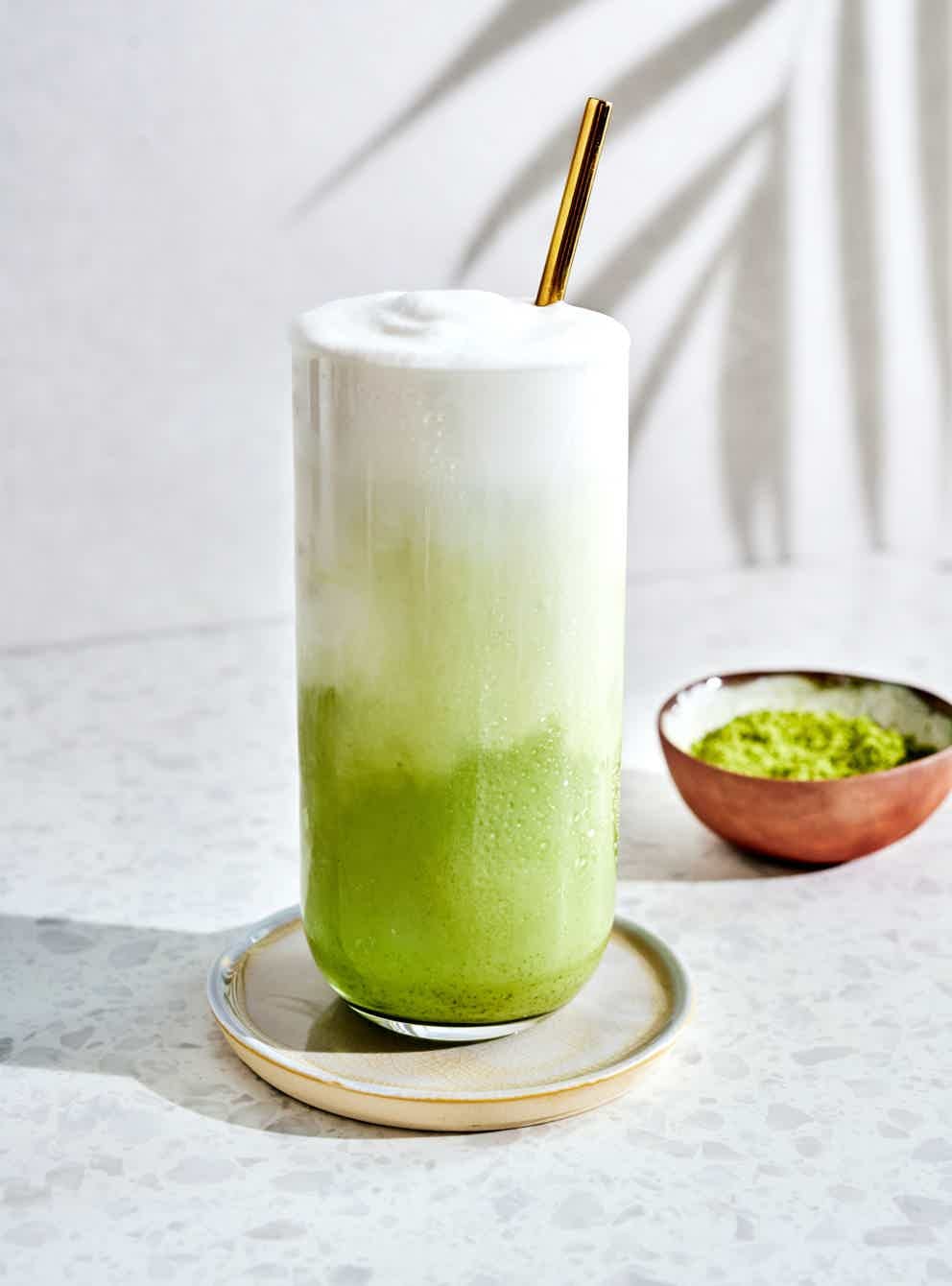
Ingredients serves 1
- 2 g matcha (1 level teaspoon)
- 40–50 ml water at 80 °C
- 200 ml milk of your choice (cow, oat, almond or coconut)
- 1 teaspoon honey, date syrup or sugar (optional)
- 1 drop orange-blossom water or 1 pinch cinnamon (optional)
Preparation
- Sift 2 g of matcha into a bowl or large mug
- Add 40–50 ml of water at 80 °C, plus your sweetener if using
- Whisk in a zigzag for 15–20 seconds until you have a smooth, foamy shot
- Heat the milk to around 60–65 °C without boiling, adding the orange-blossom water if you like
- Froth the milk with an electric frother or by shaking it in a jar
- Gently pour the milk over the matcha shot, then spoon the foam on top
- Dust with a pinch of cinnamon if you like and serve straight away
For a homemade matcha latte, whisk 2 g of matcha with 40–50 ml of water at 80 °C, then pour 200 ml of hot, frothy milk over it, sweetened or not as you like. In five minutes you get a creamy, soft-green drink that's every bit as good as the ones served in coffee shops in Casablanca or Rabat, for a fraction of the price.
Why people love matcha lattes
A matcha latte is often the gateway to matcha. Milk rounds off the grassy notes, softens any bitterness and adds a comforting, creamy texture. It's a great alternative to morning coffee: one cup contains around 60–70 mg of caffeine, roughly the same as an espresso, but the L-theanine naturally present in tea gives a calmer energy, without the spike and crash. Matcha is also rich in antioxidants, making it an enjoyable drink that slots easily into your routine.
The secret: a proper matcha shot
It's tempting to stir the powder straight into the milk. The result is lumps and a flat taste. The right way is to make a small concentrated shot first, like an espresso. Sift the powder, add a little water at 80 °C and whisk until smooth and slightly foamy. If you haven't mastered the motion yet, our guide on how to make matcha explains the zigzag whisking technique.
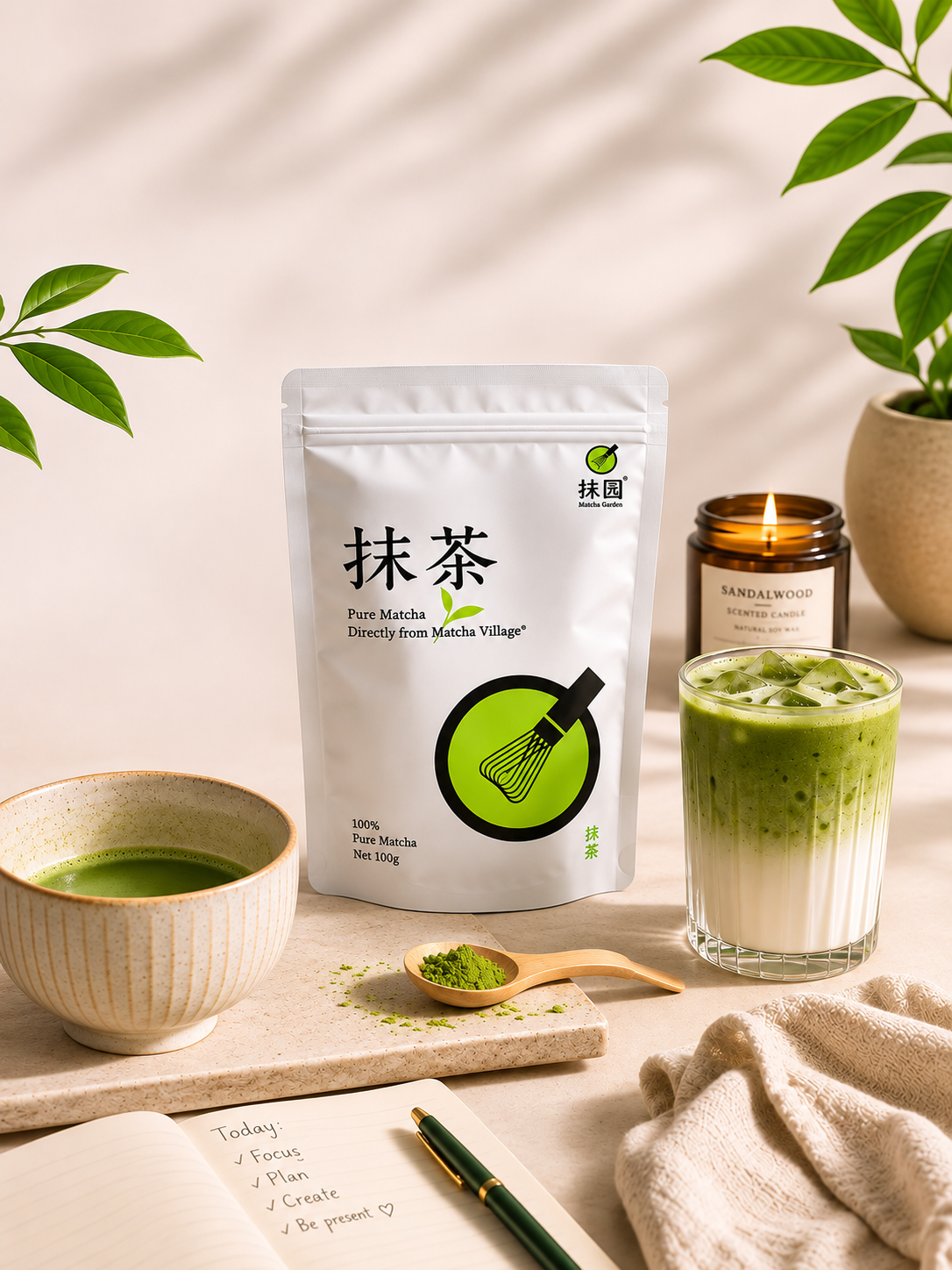
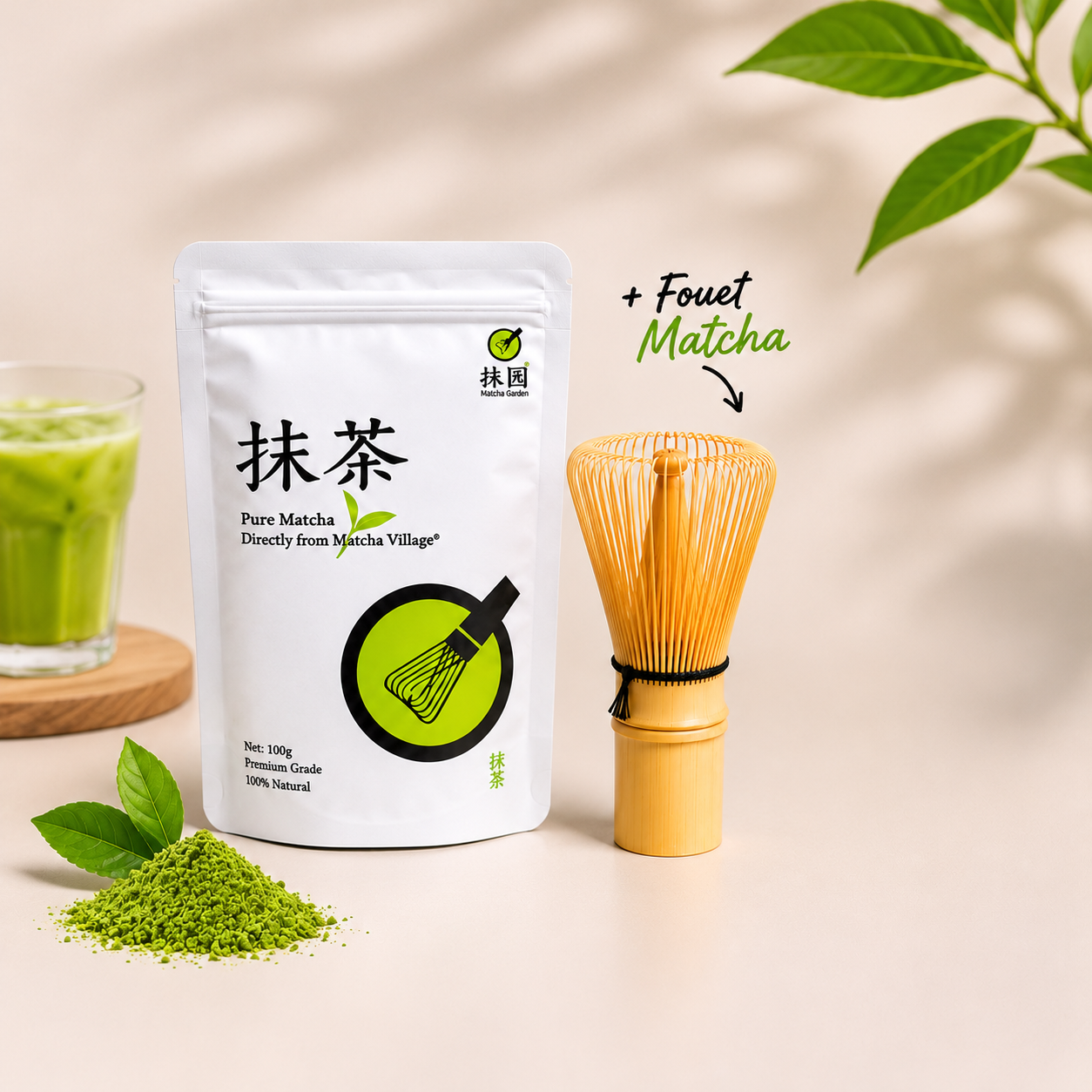
A pure, additive-free matcha makes all the difference here: our organic matcha powder is 100% organic, grown in Japan, with no added sugar. If you'd like to start with the right tool, the 100 g matcha with whisk bundles the powder and the chasen.
Which milk to choose?
Each milk brings its own character:
- Whole cow's milk: the creamiest, froths easily and gives the most classic latte.
- Oat milk: naturally sweet, pairs beautifully with matcha and froths well in its barista version.
- Almond milk: lighter, with a nutty note reminiscent of Moroccan pastries.
- Coconut milk: rich and tropical, ideal iced in summer.
Heat the milk to around 60–65 °C: any hotter and it loses its sweetness and the foam becomes less stable.
To sweeten or not?
Good matcha is enjoyable on its own, but a touch of sweetness helps when you're starting out. Some options:
- Honey: a teaspoon of orange-blossom or thyme honey, beautifully fragrant.
- Date syrup: a very local choice with a caramel taste, perfect during Ramadan.
- Sugar: white or brown, dissolved in the hot matcha shot.
- Nothing at all: with oat milk, which is often naturally sweet, many people find the latte sweet enough as it is.
Always add your sweetener to the hot matcha shot: it dissolves far better there than in the milk.
Moroccan twists
Matcha lattes work wonderfully with the flavours of Moroccan cooking.
- Orange blossom (zhar): a single drop of orange-blossom water in the milk is enough to perfume the cup. Go easy, it quickly takes over.
- Cinnamon: a pinch on the foam, or a stick left to infuse in the hot milk, for a cosy latte on winter evenings.
- Almond: a few drops of almond extract, or toasted flaked almonds on top.
These variations make a lovely latte to serve at ftour or in the afternoon, alongside a few dates or a gazelle horn.
Café tricks for a great latte
- Pour the milk onto the shot, not the other way round: the colour blends better and the foam stays on top.
- Froth the milk with an electric frother, a steam wand, or by shaking it in a sealed jar and then microwaving it for 30 seconds.
- Hold back the foam with a spoon as you pour, then spoon it on at the end for a nice dome.
- Use a warmed cup to keep the latte hot for longer.
Mistakes to avoid
Don't pour boiling water on matcha, it will turn bitter. Don't skip sifting. And don't boil the milk: it develops a cooked taste that masks the tea's aroma.
Craving something cold?
When the Moroccan summer heat arrives, switch to the iced version: our iced strawberry matcha latte is perfect for scorching afternoons. To find out how many cups you can enjoy, also read how much matcha per day.
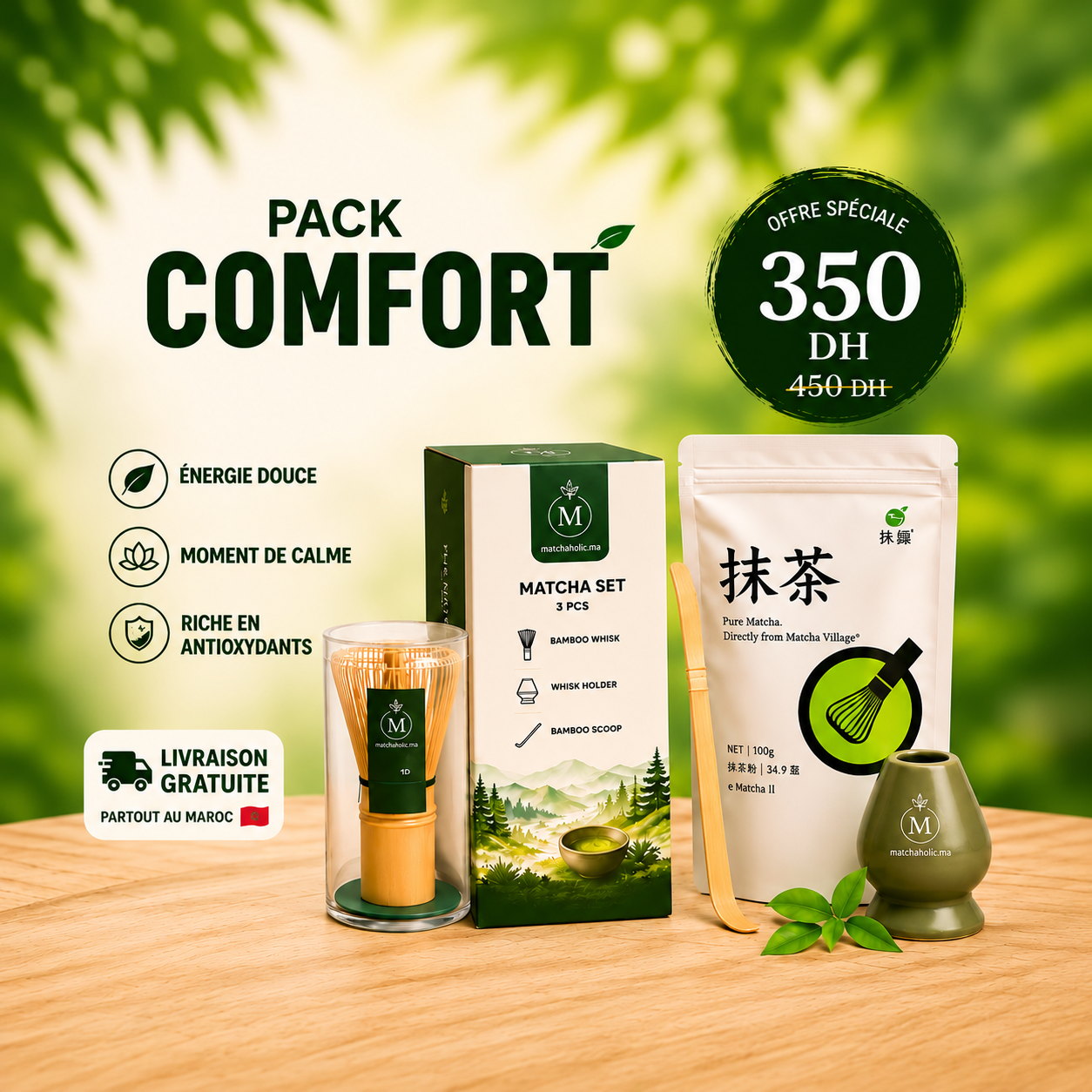
One 100 g pouch makes around 50 lattes. And if you want everything you need in one go, the Comfort pack 100 g is the simplest option. Free delivery across Morocco in under 48 hours, with cash on delivery.
FAQ
What is the best milk for a matcha latte?
Oat milk and whole cow's milk give the creamiest foam. Almond milk is lighter, while coconut milk is richer.
How much matcha goes in a latte?
Use 2 g of matcha, about one level teaspoon, for 200 ml of milk. Go up to 3 g if you want a stronger tea flavour.
Does a matcha latte have as much caffeine as coffee?
With 2 g of matcha, a latte contains about 60–70 mg of caffeine, roughly like an espresso and less than a large filter coffee.
Can I make a matcha latte without a whisk?
Yes, shake the sifted matcha with hot water in a sealed jar, or use an electric frother. The key is a lump-free shot.
For this recipe
What we use
Blog
Read next
Matcha and weight loss: what's true and what's exaggerated
Matcha will not make you lose weight on its own. Its real strength is replacing sodas, frappés and very sweet teas with a sugar-free drink. Here are the facts versus the hype.
Does matcha keep you awake? Caffeine, timing and tips
A cup of matcha contains 60 to 70 mg of caffeine, which stays active for several hours. Here is when to stop and how to enjoy it without ruining your nights.
Drinking matcha on an empty stomach: good or bad idea?
Matcha on an empty stomach suits some people and makes others queasy. It all depends on your stomach: here is how to enjoy it in the morning without discomfort.