
Matcha and weight loss: what's true and what's exaggerated
Matcha will not make you lose weight on its own. Its real strength is replacing sodas, frappés and very sweet teas with a sugar-free drink. Here are the facts versus the hype.
No, matcha will not make you lose weight on its own: no food or drink is a miracle product. Studies suggest at best a modest effect of green tea on energy expenditure, hard to notice in everyday life. Its real value lies elsewhere: swapping sugary drinks for an unsweetened matcha can genuinely lighten your day.
Where does matcha's slimming reputation come from?
Matcha is powdered green tea that you drink whole. It contains caffeine (about 60 to 70 mg per 2 g cup) and is rich in antioxidants, including catechins such as EGCG. Several studies have looked at how the caffeine and catechins in green tea together might affect energy expenditure and fat use.
Broadly speaking, here is what we can take away:
- the effects observed are modest, when they appear at all;
- they vary a lot depending on the person, the dose and the quality of the study;
- many studies use concentrated extracts, not a simple cup of tea.
In other words, a cup of matcha does not make up for an unbalanced diet, and calling it a fat burner would be misleading.
The real advantage: what matcha replaces
This is where matcha gets interesting. Think about what we often drink during the day: a soda on a café terrace, an iced frappé topped with whipped cream, a packaged juice, or a generously sweetened mint tea. These drinks provide a lot of sugar without filling you up.
A matcha made simply with water, or with a splash of unsweetened milk, has very few calories. Replacing even one sugary drink a day can make a real difference over a week, without feeling deprived. In summer, an unsweetened iced matcha is just as refreshing as a soda, as we show in our article on matcha in summer.
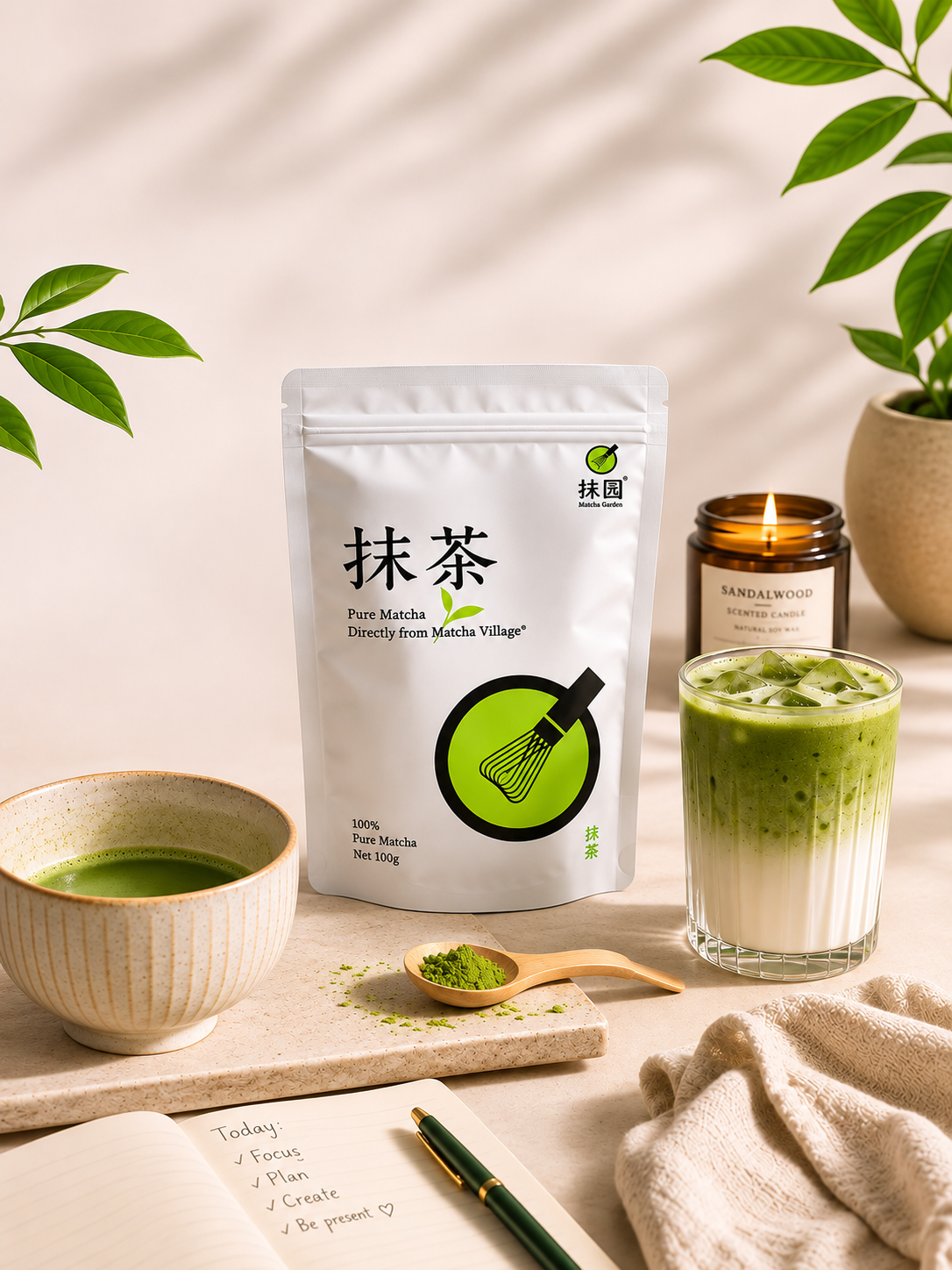
Our organic matcha powder is 100% organic, with no sugar or additives, so you stay in control of what goes into your cup.
Traps to avoid
Matcha quickly loses its edge when it is drowned in sugar:
- Very sweet café lattes: syrup, condensed milk, whipped cream, sauces... a large matcha latte like this can hold as much sugar as a dessert.
- Ready-made matcha mixes: check the label, as sugar is sometimes the first ingredient.
- Flavoured syrups added for taste.
- Sugar out of habit: many people sweeten matcha the way they sweeten mint tea, yet good matcha is perfectly enjoyable plain.
If you like a hint of sweetness, a mashed date, a little ripe banana or a naturally sweet plant milk is often enough. Our homemade matcha latte recipe lets you decide how much to add.
Matcha as part of a balanced lifestyle
Matcha can be a good everyday companion as long as it stays in its place: an enjoyable drink within a varied diet with vegetables, fruit, protein and whole grains, plus regular physical activity. Walking, taking the stairs and exercising two or three times a week count far more than a cup of tea. If you train regularly, also read our article on matcha and exercise.
Keep quantities reasonable: piling on cups speeds nothing up and mostly adds caffeine. For a healthy adult, EFSA uses up to 400 mg of caffeine per day from all sources as a reference.
Be wary of detox teas and pills
Social media is full of green tea detox plans, concentrated extract capsules and promises of kilos lost in days. Be careful:
- your body already clears waste on its own through the liver and kidneys;
- concentrated green tea extracts are nothing like a cup of matcha and are not suitable for everyone;
- rapid weight loss rarely lasts.
If you want to lose weight, have a health condition or take medication, ask your doctor or a nutrition professional for advice.
What does it cost to swap your sugary drinks?
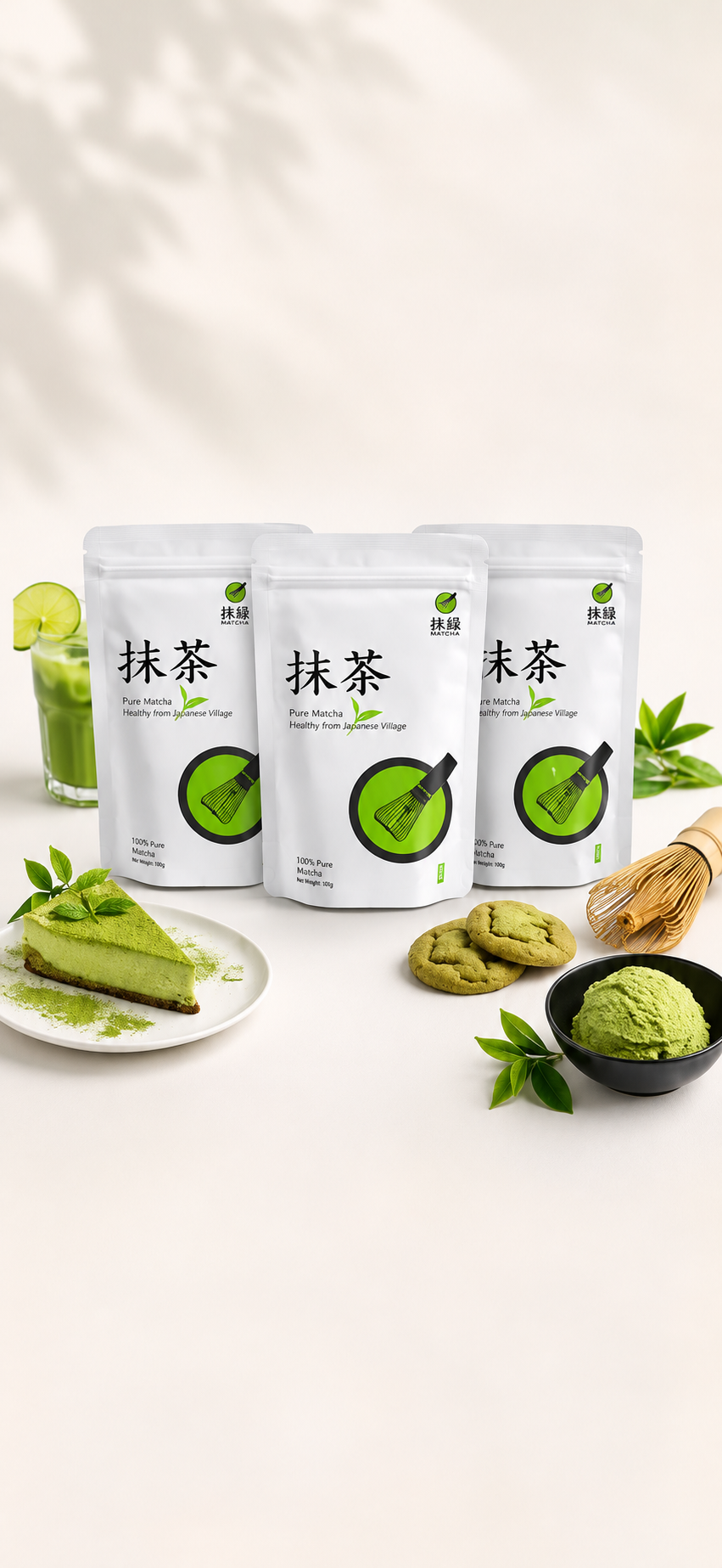
A 100 g pouch makes about 50 cups. At the time of writing, the buy 2 pouches, get 1 free offer costs 299 MAD for about 150 cups; prices may change, so check the product page. Delivery is free anywhere in Morocco, with cash on delivery.
In short
- Matcha as a fat burner: exaggerated, a modest effect at best.
- Real advantage: replacing sugary drinks with a sugar-free one.
- Traps: very sweet lattes, syrups, sweetened mixes.
- The foundation: a balanced diet and regular activity.
- Detox teas and pills: be wary, and ask a doctor if in doubt.
FAQ
Does matcha help you lose weight?
Not on its own. Studies suggest at best a modest effect on energy expenditure; its real value is replacing sugary drinks with a sugar-free one.
How many calories are in matcha?
Made with water and no sugar, matcha has very few calories. Milk, sugar, syrups and whipped cream are what push the total up.
Is a matcha latte good for weight loss?
It depends on how it is made: a homemade latte without added sugar stays light, while a version with syrup and whipped cream can be as sweet as a dessert.
Are green tea capsules a good idea for weight loss?
Concentrated extracts are nothing like a cup of matcha and are not suitable for everyone. Ask your doctor before taking them.
For this recipe
What we use
Blog
Read next
Does matcha keep you awake? Caffeine, timing and tips
A cup of matcha contains 60 to 70 mg of caffeine, which stays active for several hours. Here is when to stop and how to enjoy it without ruining your nights.
Drinking matcha on an empty stomach: good or bad idea?
Matcha on an empty stomach suits some people and makes others queasy. It all depends on your stomach: here is how to enjoy it in the morning without discomfort.
Matcha during pregnancy and breastfeeding: caffeine and care
A cup of matcha contains 60 to 70 mg of caffeine. During pregnancy and breastfeeding, the EFSA reference is 200 mg a day from all sources. Here is how to keep track.