
Banana Iced Matcha Latte: Creamy Recipe With No Added Sugar
A ripe banana, cold milk, ice and a layer of whisked matcha: a cool, naturally sweet and filling drink you can make in just 5 minutes.
Ingredients serves 1
- 1 very ripe banana (fresh, or frozen in slices)
- 200 ml cold milk (or plant-based drink)
- 2 g matcha (about 1 level teaspoon)
- 40 ml water at about 80 °C
- 1 to 2 pitted dates or 1 teaspoon honey (optional)
- 1 pinch of cinnamon (optional)
- 1 glass of ice cubes
Preparation
- Blend the banana with the cold milk, dates or honey and cinnamon until completely smooth.
- Fill a tall glass with ice and pour in the banana milk.
- Sift the matcha into a bowl to avoid lumps.
- Add the 80 °C water and whisk in a zigzag motion for 20 to 30 seconds until you get a fine foam.
- Slowly pour the matcha over the banana milk to create a layered effect.
- Stir just before drinking and enjoy straight away.
A banana iced matcha latte takes 5 minutes: blend a ripe banana with cold milk, pour it over ice, then top it with matcha whisked in a little water. The banana brings sweetness and creaminess, so you rarely need to add any sugar.
Why banana and matcha work so well together
Matcha tastes green and slightly grassy, with a touch of bitterness and the savoury roundness the Japanese call umami. A ripe banana does the opposite: it is sweet, creamy, almost vanilla-like. Together they balance each other. The result feels like a light milkshake, with the fresh green character of tea on top.
It is also a great way in for anyone who finds straight matcha a little too "green". If you are new to matcha, start with 1 g of powder and move up to 2 g as your palate gets used to it.
Choosing the right banana
Ripeness is everything. A banana that is still green makes a bland, slightly starchy drink. Pick one with brown speckles: it is sweeter, more fragrant and blends perfectly. In Morocco you can find good bananas all year round at the greengrocer or the souk; buy a few in advance and let them ripen at room temperature.
The smoothie-texture trick: peel very ripe bananas, slice them and keep them in a box in the freezer. A frozen banana replaces part of the ice and gives a thick, frosty texture, like a smoothie you drink through a straw. Very handy when the thermometer climbs past 35 °C in Marrakech or Fez.
The secret to a pretty layered look
To get that layered effect, cream at the bottom and green on top, you need two separate preparations. First, the banana and milk mixture, blended and poured over ice. Second, the matcha whisked in a small amount of water until smooth, then poured slowly on top. The matcha sits on the surface for a few moments before it blends in: that is your moment for the photo.
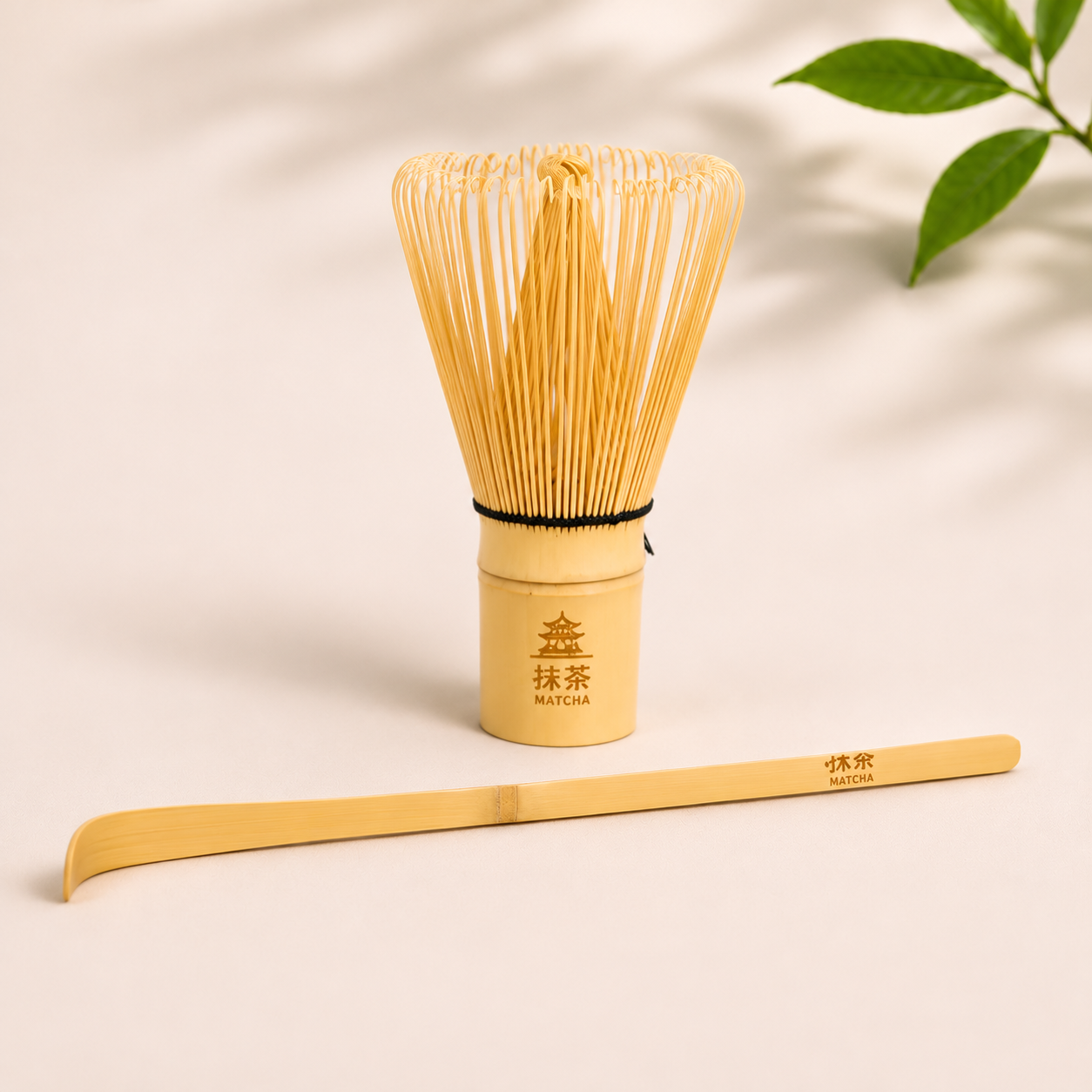
A bamboo whisk makes all the difference for a fine, even foam. Our scoop and whisk set brings together the whisk and the measuring scoop, so you get a consistent dose every day.
After the gym or at suhoor
This drink ticks several boxes. After a workout, the banana provides natural carbohydrates and potassium, the milk adds protein and the matcha a moderate amount of caffeine. It makes a complete, refreshing snack to enjoy within an hour of training.
During Ramadan, it is also a good idea for suhoor. It is quick to make, even half asleep, the banana and dates keep you full, and many matcha fans find its energy more gradual than coffee's. Just avoid drinking it right before going back to bed if you are sensitive to caffeine. To figure out where your cup fits in the day, see our article on how much matcha per day.
Variations to try
- Date version: add 2 pitted Medjool dates to the blender for a caramel-like taste, a favourite during Ramadan.
- Honey and cinnamon version: a teaspoon of honey and a pinch of cinnamon for a warm note reminiscent of Moroccan desserts.
- Vegan version: swap cow's milk for an oat or almond drink. Oat is the creamiest and pairs beautifully with banana.
- Indulgent version: add a spoonful of peanut butter or Greek yoghurt for an even more filling shake.
Which matcha should you use?
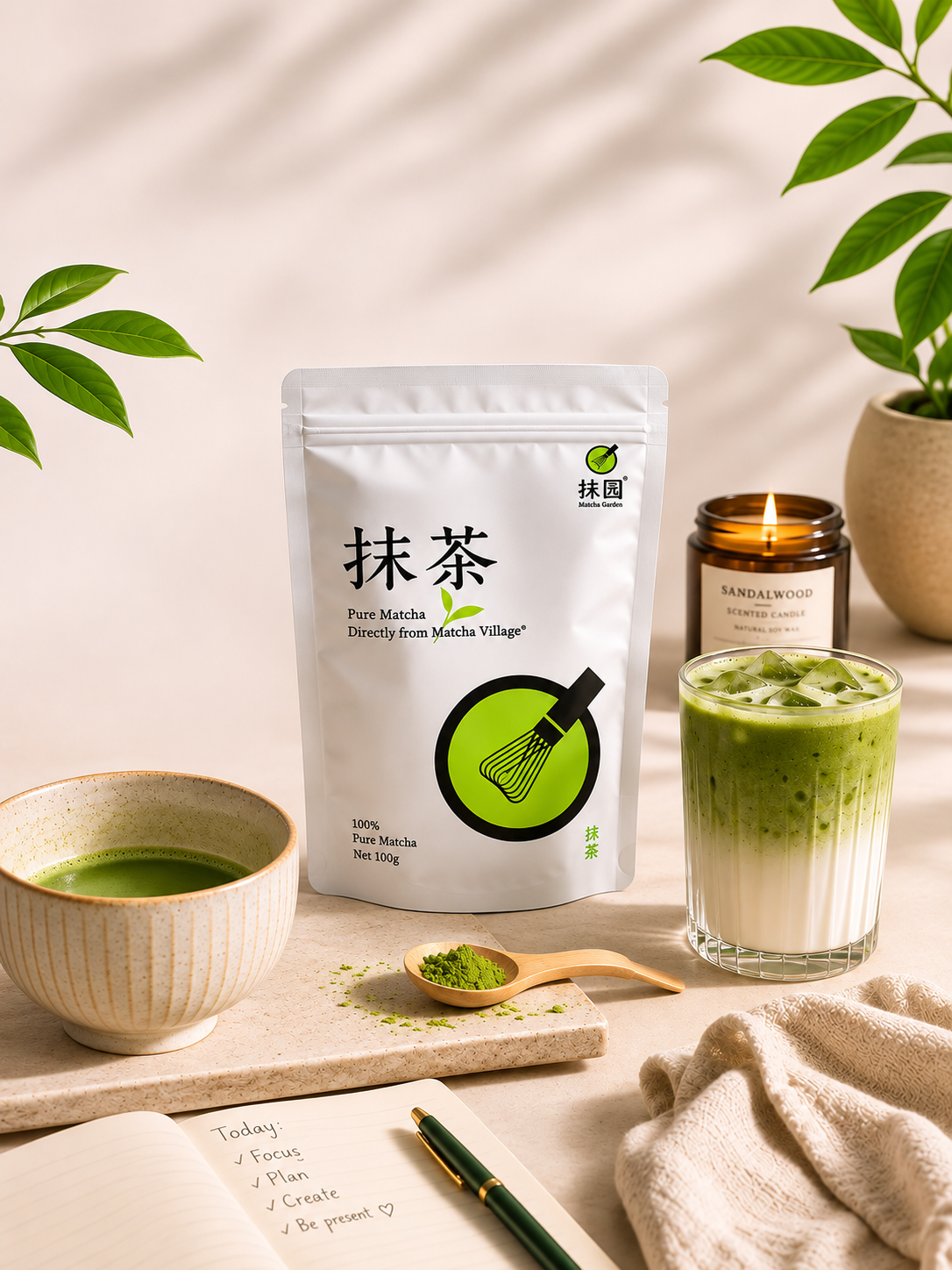
For a milky recipe like this one, choose a pure matcha with no added sugar or milk powder, so that you control the sweetness yourself. Our organic Pure Matcha is 100% organic, from Japan and free of additives: a 100 g pouch makes around 50 drinks at 2 g each. And if you enjoy fruity pairings, don't miss our strawberry iced matcha latte.
Free delivery anywhere in Morocco in under 48 hours and cash on delivery: all that's left is to get your blender out.
FAQ
Can you make a banana matcha latte without sugar?
Yes. A very ripe banana is usually sweet enough on its own. If you want it sweeter, add one or two dates instead of sugar.
Can you make a banana iced matcha latte ahead of time?
It is much better enjoyed right away, as the banana browns and the matcha loses its bright colour. You can, however, prepare frozen banana slices several days in advance.
Is a banana matcha latte good for suhoor during Ramadan?
Yes, it is a quick and filling option. Matcha contains caffeine, so stick to one cup and avoid it just before going back to sleep if you are sensitive.
Which plant milk is best for a vegan version?
An oat drink gives the creamiest result, while an almond drink is lighter. Choose an unsweetened one to stay in control of the sweetness.
How much matcha goes into a banana latte?
Use 2 g, about one level teaspoon. If you are a beginner, start with 1 g and increase gradually.
For this recipe
What we use
Blog
Read next
Matcha and weight loss: what's true and what's exaggerated
Matcha will not make you lose weight on its own. Its real strength is replacing sodas, frappés and very sweet teas with a sugar-free drink. Here are the facts versus the hype.
Does matcha keep you awake? Caffeine, timing and tips
A cup of matcha contains 60 to 70 mg of caffeine, which stays active for several hours. Here is when to stop and how to enjoy it without ruining your nights.
Drinking matcha on an empty stomach: good or bad idea?
Matcha on an empty stomach suits some people and makes others queasy. It all depends on your stomach: here is how to enjoy it in the morning without discomfort.