
Matcha Glossary: 30 Words to Know from A to Z
Usucha, chasen, tencha, umami, L-theanine… The matcha glossary from A to Z, explaining every Japanese or technical term in one or two sentences.
Matcha comes with its own vocabulary, much of it Japanese: usucha and koicha for the ways it is prepared, chasen, chashaku and chawan for the tools, tencha and ooishita for how it is produced. This glossary explains 30 terms from A to Z, each in one or two sentences, so you understand exactly what you are drinking and buying.
A–C
Antioxidants: compounds that help limit oxidation in the body's cells. Matcha is rich in them, especially catechins, because you consume the whole leaf.
Catechins: a family of polyphenols found in green tea. They account for part of its bitterness and its antioxidant content.
Ceremonial grade: a marketing term that usually describes top-quality matcha meant to be drunk plain with water. There is no single official definition; to make sense of it, read ceremonial vs culinary matcha.
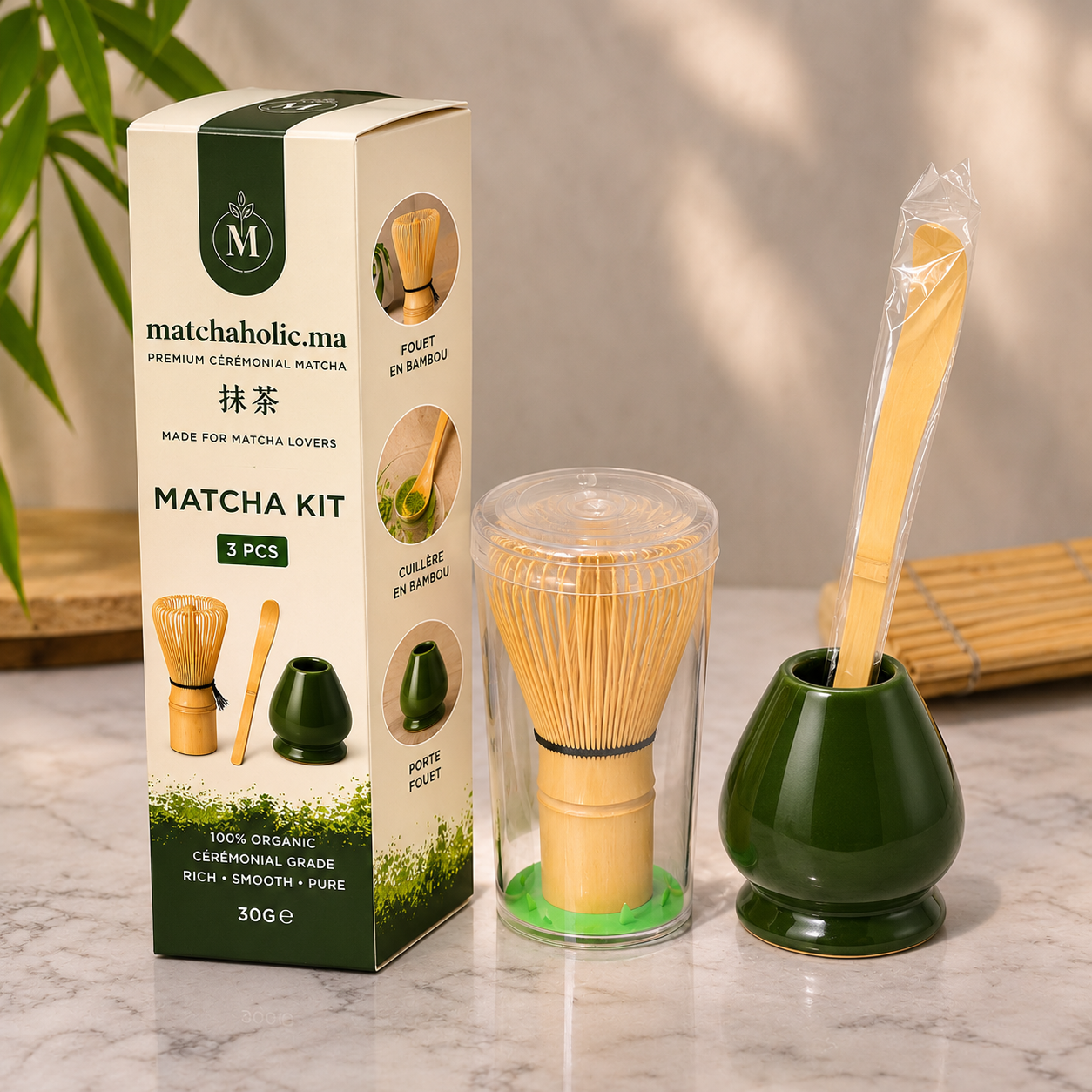
Chanoyu: the Japanese name for the tea ceremony, literally "hot water for tea". Every gesture is codified; for a simpler version at home, the 3-piece accessory kit lets you create your own little ritual.
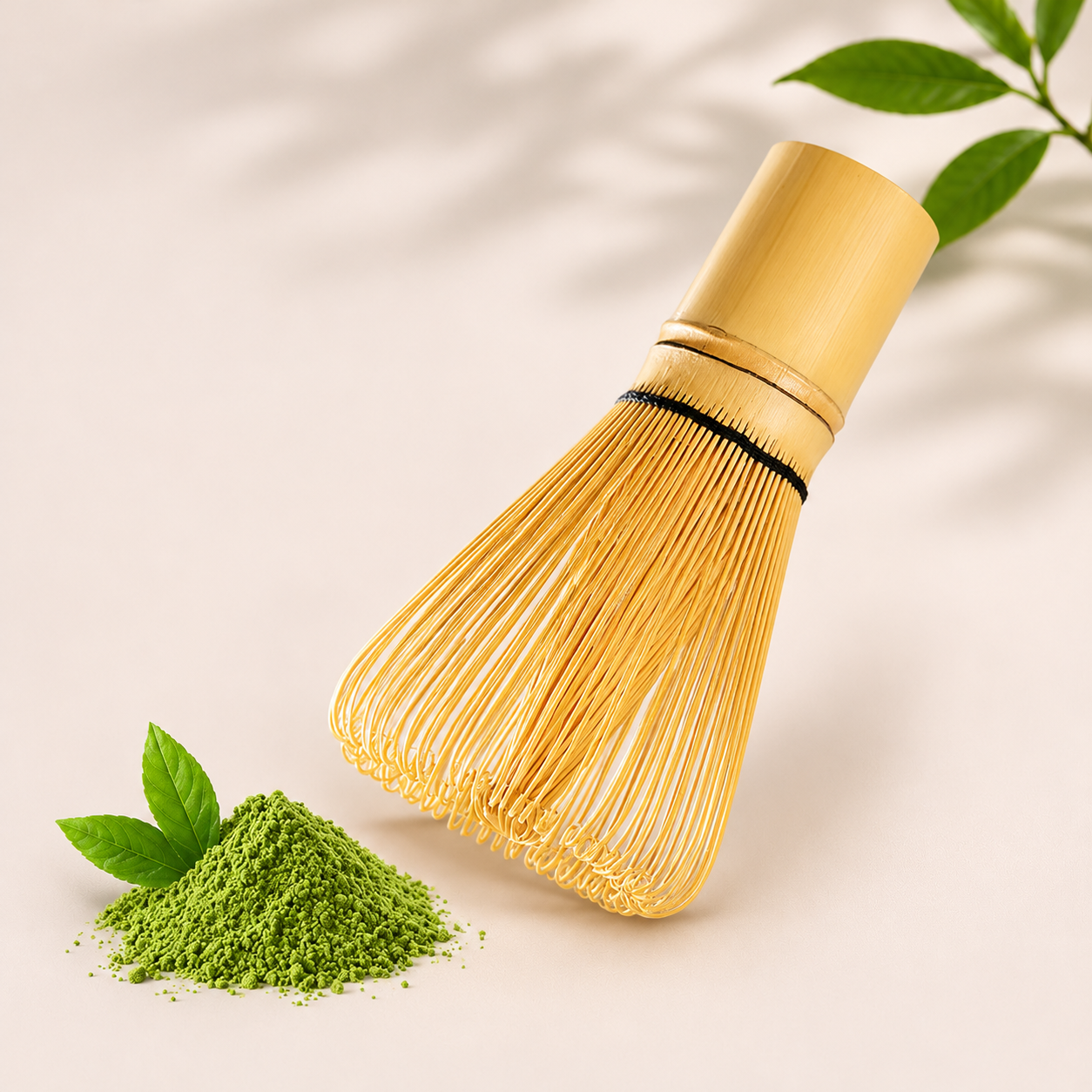
Chasen: a bamboo whisk carved from a single piece, with many fine prongs that aerate the matcha and create foam. Soak your bamboo whisk in warm water before use to soften the prongs.
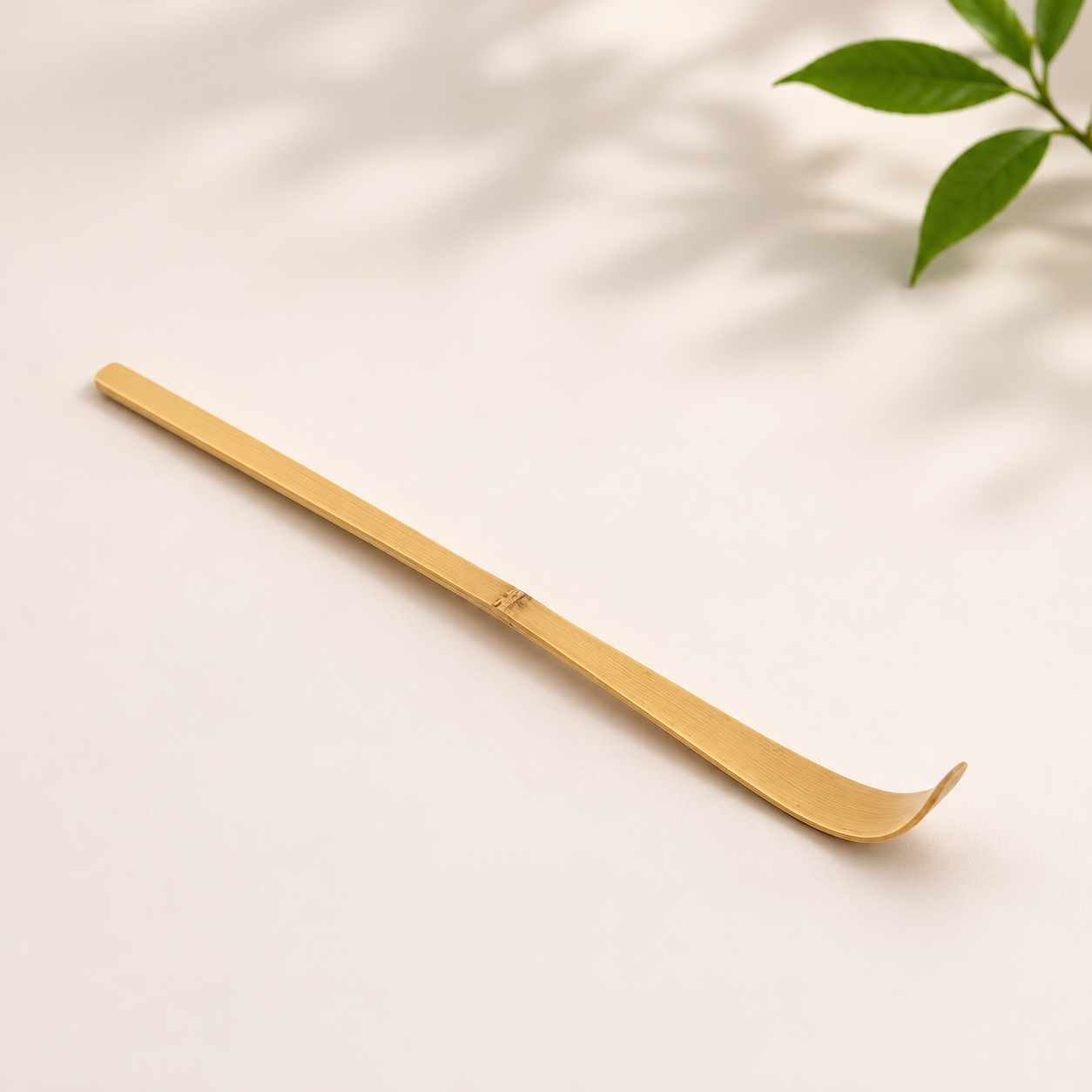
Chashaku: a slim, curved bamboo scoop used to measure matcha; two heaped scoops equal about 2 g. A simple bamboo scoop helps you get the dose right every time.
Chawan: a wide, open tea bowl that gives the whisk room to move. A wide cereal bowl works perfectly well in the meantime.
Cold whisk: preparing matcha with cold water, whisked or shaken directly without using hot water. The taste is softer and less bitter, perfect for summer.
Culinary grade: matcha intended for cooking and mixed drinks, with a bolder flavour that holds up well against milk, sugar or the butter in baking.
D–K
EGCG: short for epigallocatechin gallate, the most abundant catechin in green tea. It is widely studied for its antioxidant properties.
First harvest (ichiban-cha): literally "first tea", the year's first picking in spring. Its tender young leaves are generally the most sought-after for matcha.
Foam: the thin layer of tiny bubbles you get by whisking matcha in a zigzag. A pale, tight foam is the sign of good technique and fresh powder.
Iced matcha: matcha served over ice and topped up with cold water or milk. A refreshing drink that is hugely popular during Moroccan summers.
Kagoshima: a prefecture in southern Japan known for its large green tea production, matcha included.
Koicha: "thick tea", a very concentrated preparation with much more powder and much less water than usucha. It is not whisked into foam but stirred slowly into a smooth, creamy texture.
L–O
L-theanine: an amino acid found in tea leaves, abundant in matcha thanks to shade-growing. Combined with caffeine, it gives a calmer, steadier kind of energy.
Latte: whisked matcha topped up with hot or cold milk, dairy or plant-based. Our homemade matcha latte recipe gives you the right proportions.
Matcha: a very fine powder made by grinding shade-grown green tea leaves. You consume the whole leaf, hence its intense colour and its caffeine: about 60 to 70 mg in a 2 g cup.
Natsume: a small lacquered wooden tea caddy used to present matcha during the tea ceremony.
Nishio: a city in Aichi prefecture, central Japan, long renowned for its matcha.
Organic: farming without synthetic pesticides or chemical fertilisers. It matters especially for matcha, since you drink the powdered leaf itself; ours is 100% organic.
Oxidation: the reaction of matcha to air, light and heat. Oxidised powder loses its bright green colour and turns dull and more bitter, so always reseal the pouch tightly.
S–W
Shade-growing (ooishita): covering the tea plants for a few weeks before harvest. Deprived of sunlight, the leaves produce more chlorophyll and amino acids, becoming greener and sweeter.
Sifting: passing the powder through a small fine sieve before adding water. This simple step prevents lumps and gives a more even foam.
Stone mill: a traditional stone grinder that turns slowly to reduce tencha to powder without heating it. This very slow grinding partly explains matcha's price.
Tencha: shade-grown tea leaves that are steamed, dried and stripped of stems and veins. It is the raw material that gets ground into matcha.
Uji: an area near Kyoto, often described as the historical birthplace of matcha in Japan.
Umami: the fifth taste after sweet, salty, sour and bitter, a round, savoury sensation. In good matcha, it balances the bitterness.
Usucha: "thin tea", the most common preparation, with about 2 g of matcha and 60 to 80 ml of water at 70–80 °C whisked into a foam. The full method is in our guide on how to prepare matcha.
Wagashi: traditional Japanese sweets, often made with red bean paste, served before matcha to balance its bitterness. In Morocco, a date or a little amlou does the job beautifully.
FAQ
What is the difference between usucha and koicha?
Usucha is a light, frothy matcha made with about 2 g of powder and 60 to 80 ml of water. Koicha is a thick matcha with much more powder and little water, stirred slowly rather than whisked.
What is the matcha whisk called?
The matcha whisk is called a chasen. It is carved from a single piece of bamboo and has many fine prongs that froth the tea.
What does tencha mean?
Tencha refers to shade-grown tea leaves that have been dried and stripped of their stems and veins. It is what gets ground to make matcha.
What is umami in matcha?
Umami is the fifth taste, round and savoury. In matcha it comes mainly from amino acids such as L-theanine, which shade-growing encourages.
For this recipe
What we use
Blog
Read next
Matcha and weight loss: what's true and what's exaggerated
Matcha will not make you lose weight on its own. Its real strength is replacing sodas, frappés and very sweet teas with a sugar-free drink. Here are the facts versus the hype.
Does matcha keep you awake? Caffeine, timing and tips
A cup of matcha contains 60 to 70 mg of caffeine, which stays active for several hours. Here is when to stop and how to enjoy it without ruining your nights.
Drinking matcha on an empty stomach: good or bad idea?
Matcha on an empty stomach suits some people and makes others queasy. It all depends on your stomach: here is how to enjoy it in the morning without discomfort.