
Matcha White Chocolate Cookies: Soft, Chewy and Bright Green
Matcha cookies that are soft in the middle, crisp at the edges and vividly green: the right dose, the right bake and an egg-free option.
Ingredients serves 12
- 125 g soft butter
- 80 g white sugar
- 60 g light brown sugar
- 1 egg (or 50 g plain yoghurt for the egg-free version)
- 1 teaspoon vanilla extract
- 200 g plain flour
- 12–15 g matcha (about 2 tablespoons)
- 1/2 teaspoon baking powder
- 1 pinch of salt
- 120 g white chocolate chips or 100 g chopped toasted almonds
Preparation
- Preheat the oven to 170–180 °C and line a tray with baking paper
- Beat the soft butter with both sugars until creamy
- Add the egg (or yoghurt) and vanilla and mix just until combined
- Sift the flour, matcha, baking powder and salt over the bowl and fold in with a spatula
- Stir in the white chocolate or almonds and chill the dough for 30 minutes if you can
- Shape 12 balls of about 45 g and space them well apart on the tray
- Bake for 9–11 minutes, until the edges are set and the centre is still soft
- Leave on the tray for 5 minutes, then cool on a rack
For bright green matcha cookies, use about 2 tablespoons of matcha (12–15 g) for 12 cookies, pair it with white chocolate or almonds, and keep the bake short: 9 to 11 minutes at 170–180 °C. A short bake keeps the colour vivid and the centre chewy, while baking too long turns them a dull khaki.
Why do matcha and white chocolate work so well?
Matcha has a deep, vegetal flavour with a gentle bitterness. White chocolate, sweet and milky, balances it perfectly: every bite moves between the freshness of the tea and the richness of cocoa butter. It's the same idea as a matcha latte, where milk softens the tea. If white chocolate feels too sweet, chopped toasted almonds are a great alternative, very Moroccan in spirit, adding crunch and a nutty note.
How much matcha for properly green cookies?
In baking, matcha is used more generously than in drinks, because flour, butter and sugar mute its flavour. For a batch of 12 cookies, 12–15 g of matcha gives a clear colour and a confident taste without too much bitterness. With 8 g you'll get pale green cookies with a gentler flavour, ideal for kids.
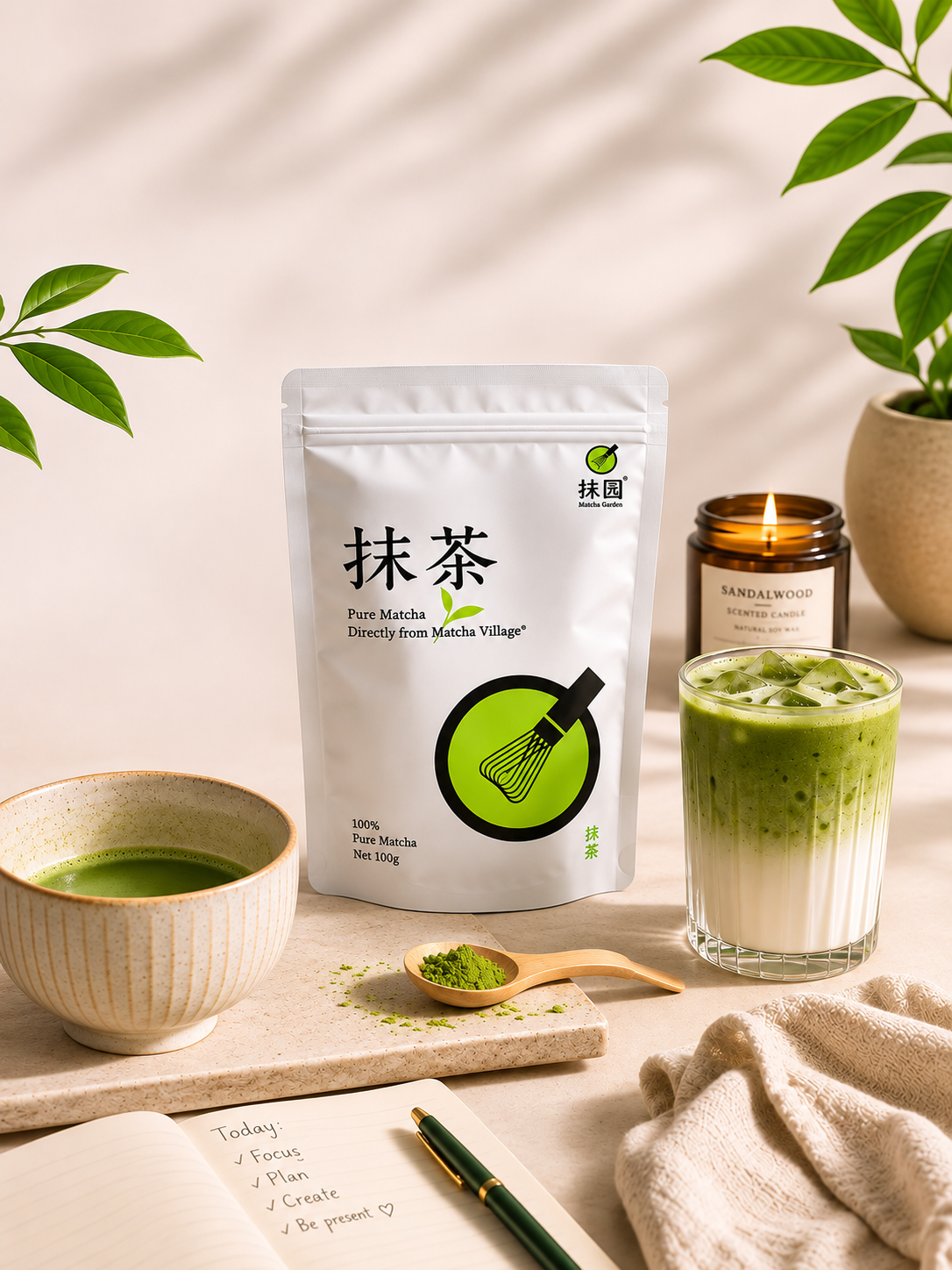
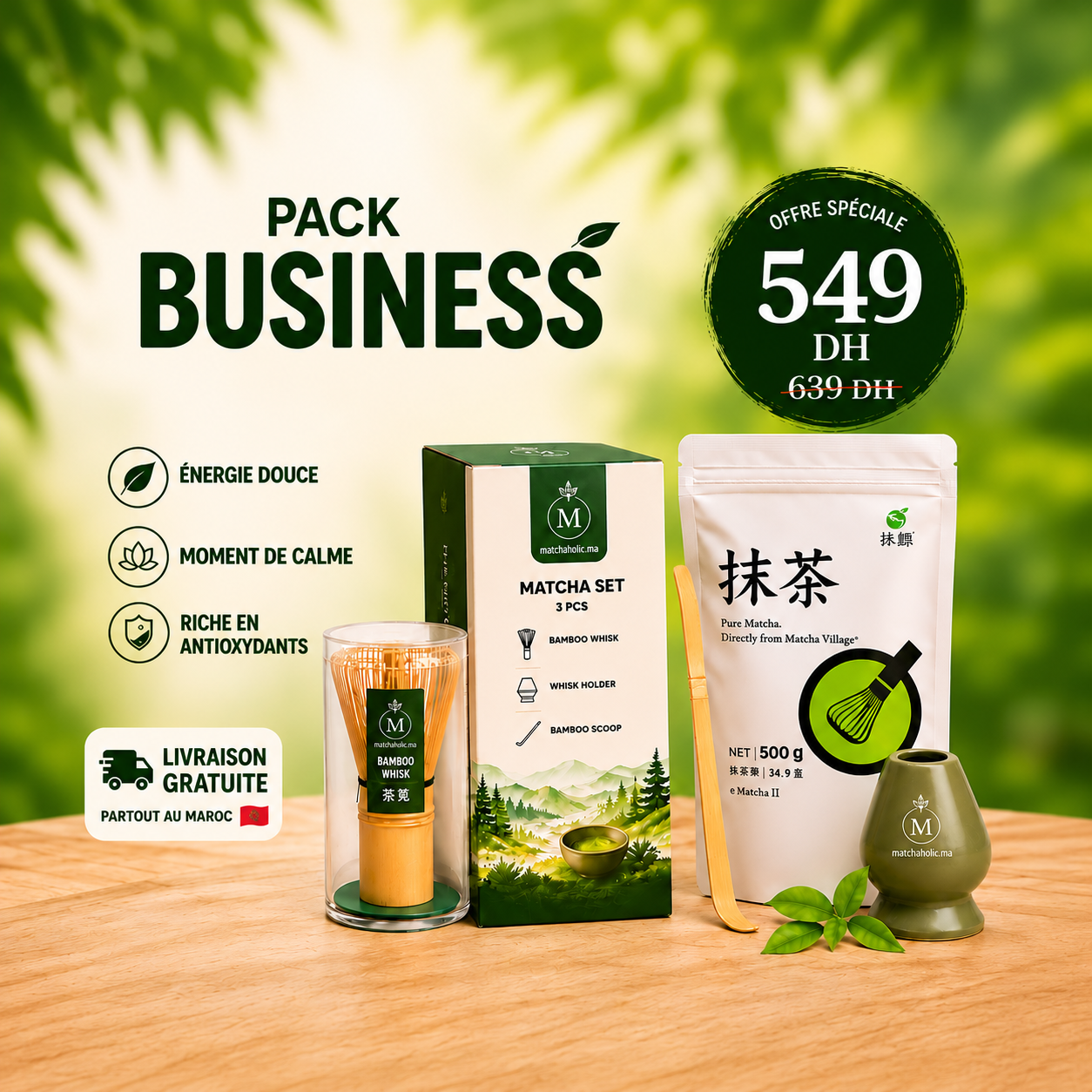
Powder quality shows straight away. A pure matcha with no sugar or additives, like our organic matcha powder, gives a clean colour and a true aroma. To decide which quality to bake with and which to save for the bowl, read our guide on ceremonial vs culinary matcha. If you bake often, the Comfort Pack 500 g with essential kit keeps a generous supply on hand; at the time of writing it's listed at 549 MAD, a price that may change, so check the product page.
How do you keep cookies green in the oven?
Matcha's chlorophyll is heat-sensitive. Above 180 °C, or with too long a bake, the green darkens and the flavour turns more bitter. A few simple rules:
- Oven at 170–180 °C, no hotter, preheated for at least 10 minutes.
- Take the cookies out when the edges are set but the centre is still soft: they finish cooking on the tray.
- Go easy on dark sugar: a mix of white sugar and a little brown sugar keeps the colour brighter.
- Bake on the middle rack so the bottoms don't brown.
Tips for the perfect texture
- Sift the matcha with the flour: essential to avoid dark green specks and bitter lumps.
- Use soft butter, not melted: the cookies spread less and stay thick.
- Chill the dough for 30 minutes if you have time: the flavours develop and the cookies stay taller. In a Casablanca or Marrakech summer, chilling also stops the dough getting too soft.
- Roll generous balls of about 45 g, tall rather than flat, for a gooey centre.
- Press a few extra chips on top just before baking for that bakery look.
An egg-free version
To skip the egg, replace it with 50 g of plain yoghurt, or with 1 tablespoon of ground flaxseed mixed with 3 tablespoons of water and left to thicken for 5 minutes. The cookies come out a little more tender and slightly less golden, which shows off the green even more. With plant-based butter and dairy-free white chocolate, or simply almonds, you get a fully plant-based batch.
What to serve them with
These cookies are perfect at snack time with a glass of cold milk, a mint tea or, to stay on theme, a homemade matcha latte. In summer they're great with an iced strawberry matcha latte. They also make a lovely homemade gift for a party or a dinner invitation, packed in a tin.
How to store them
Let them cool completely on a rack, then keep them in an airtight container away from light: they stay good for four to five days. Light fades matcha, so an opaque tin is best. You can also freeze balls of raw dough and bake them straight from frozen, adding a minute or two.
On caffeine: each cookie contains about 1 g of matcha, roughly 30 mg of caffeine, worth keeping in mind if you're serving them to children or late in the evening.
Matchaholic delivers free across Morocco, usually within 48 hours in most cities, with cash on delivery and WhatsApp customer service 7 days a week.
FAQ
Why do my matcha cookies turn brown or khaki?
They baked too long or too hot. Stay between 170 and 180 °C and take them out as soon as the edges are set, even if the centre looks soft.
How much matcha should I put in cookies?
Use 12–15 g of matcha, about 2 tablespoons, for 12 cookies. With 8 g, both flavour and colour will be milder.
Can I make matcha cookies without eggs?
Yes, replace the egg with 50 g of plain yoghurt or with a tablespoon of ground flaxseed mixed with three tablespoons of water.
What can I use instead of white chocolate?
Chopped toasted almonds, cashews or pistachios all work well. They add crunch and cut down the sugar.
Do matcha cookies contain caffeine?
Yes, a little: with about 1 g of matcha per cookie, that's around 30 mg of caffeine. Worth considering for children or in the evening.
For this recipe
What we use
Blog
Read next
Matcha and weight loss: what's true and what's exaggerated
Matcha will not make you lose weight on its own. Its real strength is replacing sodas, frappés and very sweet teas with a sugar-free drink. Here are the facts versus the hype.
Does matcha keep you awake? Caffeine, timing and tips
A cup of matcha contains 60 to 70 mg of caffeine, which stays active for several hours. Here is when to stop and how to enjoy it without ruining your nights.
Drinking matcha on an empty stomach: good or bad idea?
Matcha on an empty stomach suits some people and makes others queasy. It all depends on your stomach: here is how to enjoy it in the morning without discomfort.