
How to Choose Good Matcha in Morocco: The Complete Buying Guide
Colour, texture, aroma, origin, organic label, packaging: simple criteria to recognise good matcha and avoid unpleasant surprises when buying in Morocco.
To choose good matcha in Morocco, start with the colour (bright green, never yellow or brown), the ingredient list (100% powdered green tea, with no sugar or milk powder), the origin (ideally Japan) and the packaging (opaque and well sealed). Good matcha smells like fresh grass and tastes smooth and rounded, with a slight bitterness. Here is how to tell the good from the bad, whether you buy online, on social media or in a shop.
What exactly is matcha?
Matcha is Japanese green tea ground into a very fine powder. A few weeks before harvest, the tea bushes are shaded, so the leaves develop more chlorophyll and flavourful compounds. Stems and veins are then removed and the leaves are slowly stone-ground. Unlike brewed tea, you drink the whole leaf, suspended in water or milk. That is why the quality of the raw material shows immediately in the cup.
Ceremonial or "latte": understanding grades
You will often see labels such as "ceremonial", "premium", "latte" or "culinary". There is no official international standard: these are marketing categories, and every brand uses them in its own way. Broadly speaking:
- So-called "ceremonial" matcha comes from the first harvests, with young, tender leaves. It is meant to be drunk straight, with water only. Its taste is smooth, rich in umami and low in bitterness.
- "Latte" or "culinary" matcha often comes from later harvests. Its flavour is bolder and more astringent, which helps it stand out against milk, fruit or in baking.
The right reflex: don't rely on the label alone. Judge the product on its colour, aroma, taste and how transparent the brand is.
5 criteria to check
- Colour: good matcha is a vivid, almost glowing green. A dull, yellowish or brownish green points to oxidised, old or lower-quality powder.
- Texture: the powder should be extremely fine and soft to the touch, like talc. It may form small clumps, which is why you sift it, but it should never feel gritty.
- Aroma: when you open it, it should remind you of freshly cut grass or spinach, sometimes with a slightly sweet note. A smell of hay, dust, or no smell at all is a bad sign.
- Taste: smooth, vegetal and rounded (that's umami), with a light bitterness on the finish. A very bitter or harsh matcha, even when properly prepared, is often low quality or poorly stored.
- Origin: Japan remains the benchmark. Among the best-known regions are Uji (near Kyoto), Nishio (Aichi prefecture) and Kagoshima in the south. A serious brand will at least state the country of origin.
Organic certification and ingredient list
With matcha you consume the whole tea leaf, so choosing an organically grown powder makes sense. Check for the organic label and read the ingredient list. It should be just a few words: powdered green tea. Anything else (sugar, milk powder, flavourings, maltodextrin, colourings) means you are buying a blend, not pure matcha.
Packaging and freshness
Light, air, heat and humidity are matcha's four enemies. Good packaging is therefore:
- opaque, never a clear jar sitting in a shop window
- sealed when it reaches you
- resealable, with a zip or an airtight lid
Also check the packing date or best-before date. The fresher the matcha, the greener and more fragrant it is.
Red flags with social-media sellers
Matcha has become trendy in Morocco, and offers are multiplying on Instagram and TikTok. Be careful if you notice:
- an unusually low price for a large quantity: real Japanese matcha is expensive to produce
- no stated origin and no identifiable brand
- photos of pale green or khaki powder
- "matcha" that is already sweetened or mixed with milk powder, sold as "instant matcha latte"
- no way to ask questions before buying, and no option to pay on delivery
Storing matcha in the Moroccan heat
Between June and September, temperatures often exceed 35 °C in Marrakech, Fez or Meknes, and the air is humid in Casablanca or Tangier. To keep your matcha green and flavourful:
- reseal the pouch right after each use, pressing out the air
- store it in a cool, dark cupboard, away from the oven and the window
- in summer, keep it in the fridge in an airtight container so it doesn't absorb moisture or odours
- let it come back to room temperature for a few minutes before opening, to avoid condensation
- ideally use it within about 2 months of opening
Where does Matchaholic fit in?
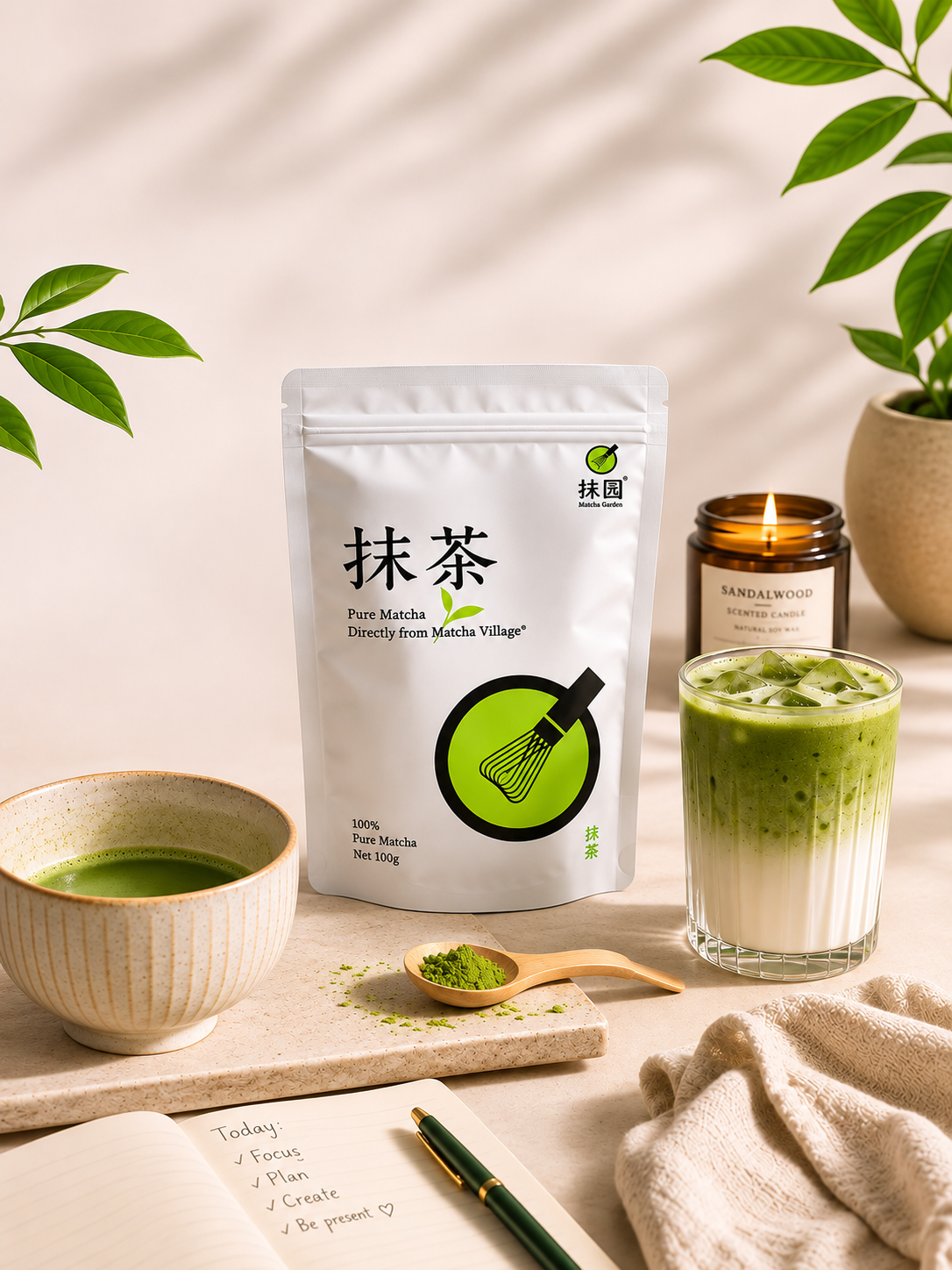
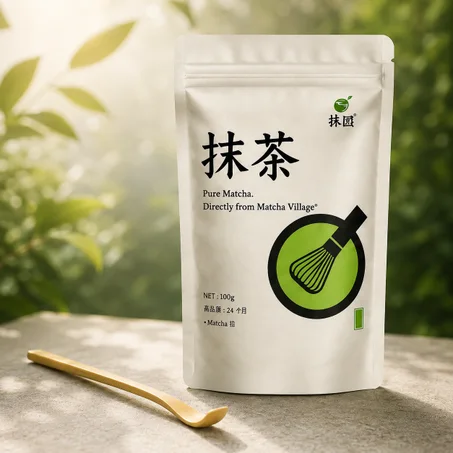
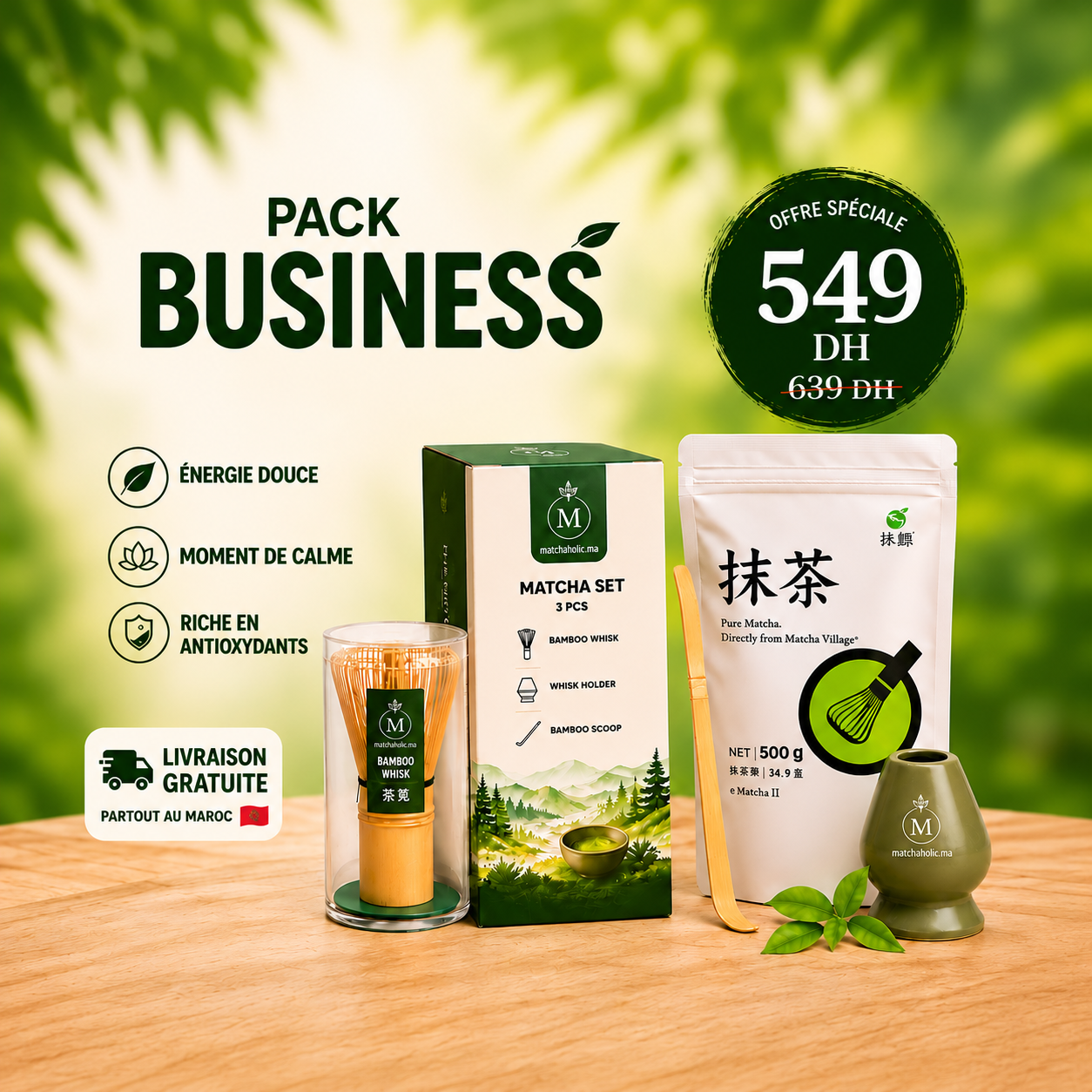
At Matchaholic we made simple choices: matcha that is 100% organic, from Japan, with no sugar or additives. Our organic Pure Matcha comes in a 100 g pouch, about 50 cups at 2 g each. To start with the right tool, the 100 g + scoop pack includes the measuring scoop, and regular drinkers can opt for the Comfort 500 g pack with essential kit. Browse the full range in our matcha collection.
Free delivery anywhere in Morocco in under 48 hours, cash on delivery and WhatsApp support 7 days a week: feel free to ask us anything before you order. Once your matcha arrives, follow our guide on how to prepare matcha to get the best out of it, then find out how much matcha to drink per day.
FAQ
How can you tell if matcha is good quality?
Good matcha is bright green, very fine, smells like fresh grass and tastes smooth with a light bitterness. A yellow or brown colour and strong bitterness point to poor quality or bad storage.
What is the difference between ceremonial and latte matcha?
These are marketing categories with no official standard. Generally, so-called ceremonial matcha comes from young leaves and is drunk straight, while latte matcha has a bolder taste designed for milk and recipes.
Should matcha be kept in the fridge?
In Morocco, during summer, it's a good idea as long as it is in an airtight container. The rest of the year, a cool, dark cupboard is enough.
How long does matcha keep once opened?
To enjoy its colour and aroma, ideally use it within about 2 months of opening. After that it gradually loses freshness and flavour.
Why is some matcha so cheap?
It is often old powder, low-quality harvests or blends containing sugar and milk powder. Always check the origin and the ingredient list.
For this recipe
What we use
Blog
Read next
Matcha and weight loss: what's true and what's exaggerated
Matcha will not make you lose weight on its own. Its real strength is replacing sodas, frappés and very sweet teas with a sugar-free drink. Here are the facts versus the hype.
Does matcha keep you awake? Caffeine, timing and tips
A cup of matcha contains 60 to 70 mg of caffeine, which stays active for several hours. Here is when to stop and how to enjoy it without ruining your nights.
Drinking matcha on an empty stomach: good or bad idea?
Matcha on an empty stomach suits some people and makes others queasy. It all depends on your stomach: here is how to enjoy it in the morning without discomfort.